Inside the Gears, Motors, and Satisfying Flip Mechanism
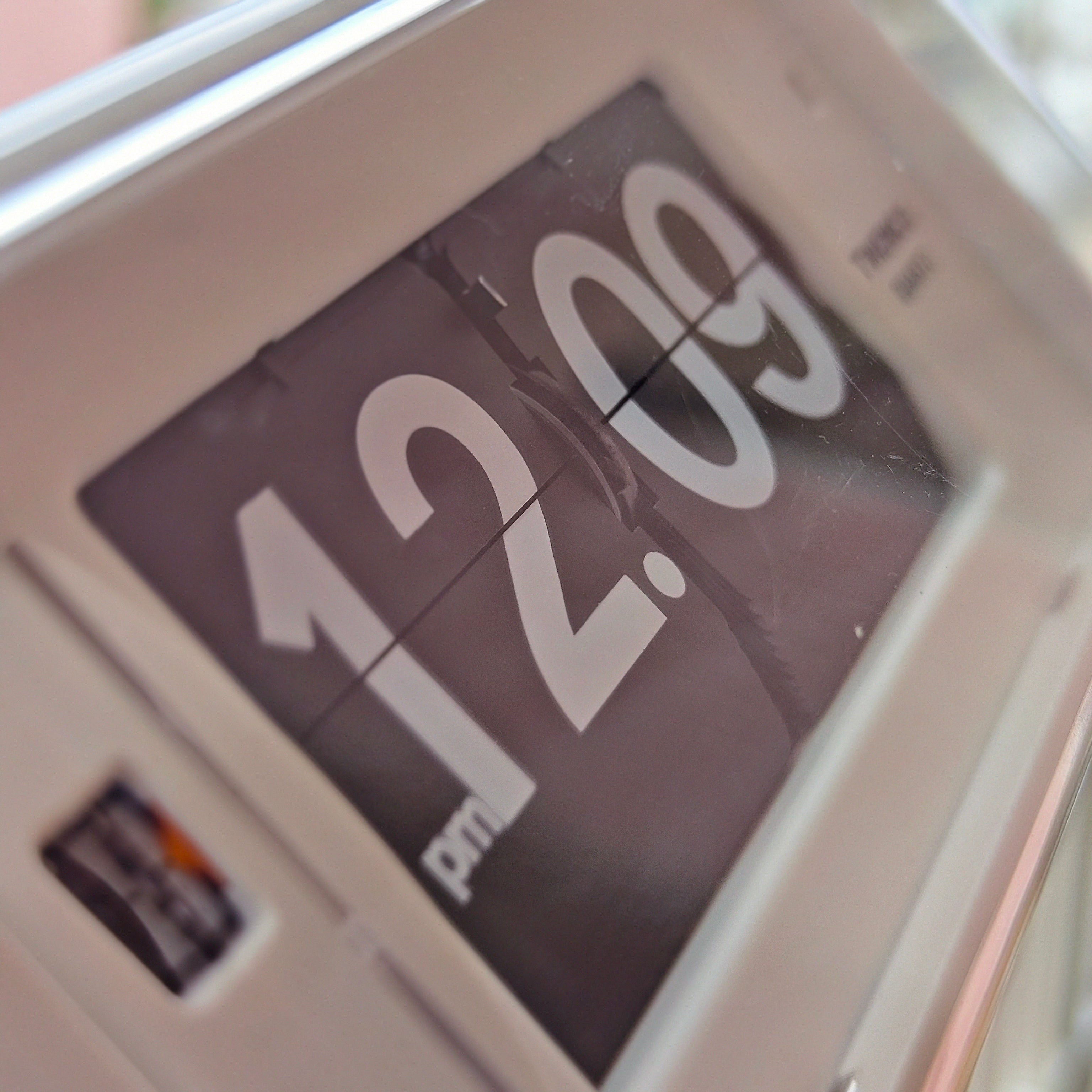
There is something uniquely satisfying about a mechanical flip clock. Every minute, a card flips down with a crisp motion and subtle sound, physically marking the passage of time. But behind that simple action is a surprisingly clever system of gears, motors, and precision engineering.
If you are deciding between this physical mechanism and a screen-based alternative, compare mechanical and digital flip clocks by display, sound, power and maintenance.
So how does a mechanical flip clock actually work?
Let’s take a look inside.
The Core Components of a Flip Clock
Most traditional flip clocks are built around four key parts:
-
A timing motor
-
A gear train
-
A flip card mechanism
-
A time display drum
These components work together continuously to advance the clock minute by minute.

1. The Timing Motor
At the heart of the clock is a small electric motor.
Older vintage flip clocks commonly used a synchronous motor, which runs at a speed synchronized with the electrical frequency from the wall outlet. This allowed the clock to maintain very accurate time.
Modern flip clocks often use:
-
Quartz movements
-
Low-power DC motors
-
Silent electronic timing systems
Because display motion and timekeeping are separate, see how to test flip-clock accuracy and distinguish real drift from a late card release.
The motor rotates slowly and continuously, providing the energy needed to move the gears.
2. The Gear Train
Connected to the motor is a series of precision gears.
These gears reduce the motor’s speed and control the timing of:
-
Seconds
-
Minutes
-
Hours
Think of it like a mechanical countdown system.
The gears rotate gradually until they reach a trigger point that activates the flip mechanism.
This is why flip clocks feel so precise — every movement is carefully timed.
3. The Flip Cards
The numbered cards are usually attached to a rotating drum or wheel.
Each card is hinged so it can flip downward when released.
For example:
-
The “12:34” card remains visible
-
When the minute changes, the “34” card flips down
-
The “35” card instantly appears underneath
This entire process takes only a fraction of a second.

4. The Trigger Mechanism
The most satisfying part is the actual flip.
As the gears rotate, a small cam or lever builds tension in the mechanism. At the exact right moment, it releases the current card.
Gravity and momentum do the rest.
The card flips downward sharply, revealing the next number beneath it.
That iconic flip sound comes from:
-
The moving card
-
The hinge impact
-
The mechanical release inside the clock
Why the Flip Feels So Satisfying
Unlike digital clocks that silently update pixels on a screen, flip clocks physically move time forward.
You can:
-
Hear it
-
See it
-
Feel the rhythm of passing minutes
That tactile experience is one reason flip clocks remain so popular today, even in a world filled with smartphones and smart displays.

Vintage vs Modern Flip Clock Mechanisms
Vintage Mechanical Flip Clocks
Older models tend to have:
-
Louder flipping sounds
-
More exposed gears
-
Heavier mechanical components
Collectors love them for their authenticity and craftsmanship.
Modern Flip Clocks
Newer versions often improve:
-
Accuracy
-
Reliability
-
Energy efficiency
-
Noise reduction
Many modern designs preserve the retro aesthetic while using updated internal technology.
More Than Just a Clock

A mechanical flip clock is more than a device for telling time.
It is a blend of:
-
Engineering
-
Industrial design
-
Motion
-
Sound
-
Nostalgia
Every flip is a tiny mechanical performance — a reminder that time is physically moving forward, one minute at a time.
That is what makes flip clocks feel timeless, even decades after they were first invented.