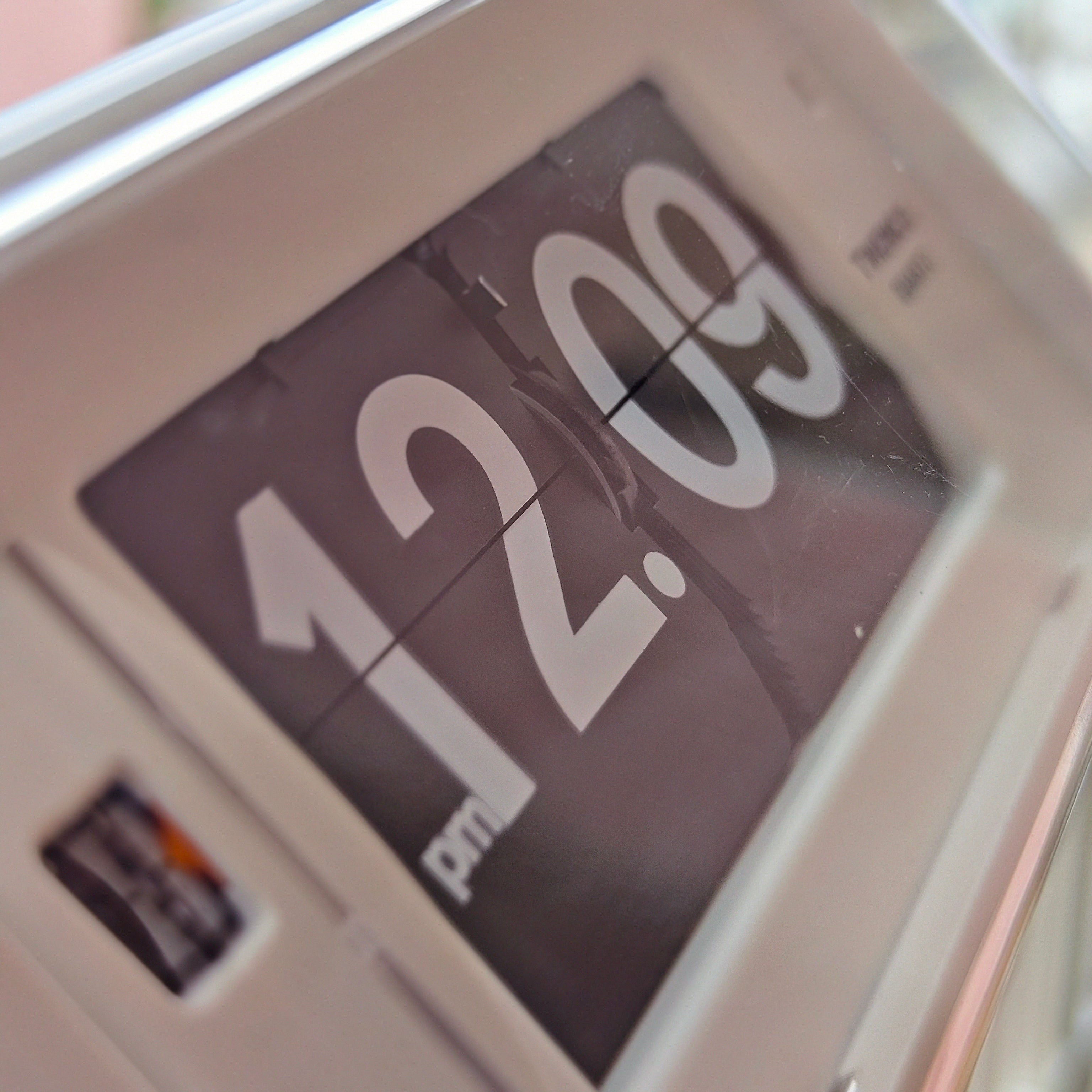
In the world of interior design, time is more than just a measurement—it’s a mood. Whether you are outfitting a minimalist apartment in Berlin or a creative studio in Brooklyn, the clock you choose acts as the heartbeat of the room.
However, before you look at the frame or the color, you have to look at the "engine." Understanding the mechanics of timekeeping is the first step in finding a piece that fits your lifestyle.
1. The Science of the "Tick": Quartz vs. Continuous Sweep
In the Western clock market, most high-quality timepieces fall into two movement categories. Understanding these will help you decide what kind of "energy" you want in your space.
The Quartz Step Movement (The Traditional Tick)
Quartz movements are the gold standard for accuracy. They use a tiny quartz crystal that vibrates at a precise frequency when an electric current is applied.
-
The Experience: This results in the classic "tick-tock" sound where the second hand jumps once per second.
-
The Vibe: For many, this rhythmic sound is nostalgic and grounding—a reminder of the steady march of time. It’s perfect for living rooms or kitchens where a bit of ambient sound adds character.
The Continuous Sweep Movement (The Silent Professional)
Sweep movements are also quartz-regulated, but they use a different gearing system to move the hands in one smooth, uninterrupted motion.
-
The Experience: No ticking. No jumping. Just a silent, graceful glide around the dial.
-
The Vibe: This is the preferred choice for bedrooms, libraries, and home offices. If you are sensitive to noise while working or sleeping, a sweep movement offers the precision of quartz without the auditory distraction.
The Flip Clock: The Mechanical Hybrid
This is where TimeWillFlip specializes. A flip clock (like those from Fartech or the industrial Twemco line) offers a unique middle ground. They utilize quartz precision to trigger a mechanical "flip" every sixty seconds. You get the silence of a sweep movement for 59 seconds, followed by a satisfying, tactile click that marks the arrival of a new minute. It is the perfect choice for those who find traditional ticking annoying but still crave a mechanical connection to their clock.
2. Choosing Your Brand: Beyond the Industrial Giants
While Twemco is often cited as the "heritage" choice for automatic calendar clocks, the modern collector often looks for something with a bit more "edge."
If you want a timepiece that feels like a piece of architectural art, Fartech is a standout. Fartech clocks are celebrated in European design circles for their sleek, often transparent or high-contrast designs. While a Twemco feels like it belongs in a mid-century bank, a Fartech feels like it belongs in a modern tech hub or a high-end design gallery. They offer a "New-Age Vintage" aesthetic that pairs beautifully with glass, steel, and monochrome interiors.
3. Scale and Proportions: Does Size Matter?
A common mistake in home staging is misjudging the visual "weight" of a clock. Judge the case against the usable wall, nearby furniture and actual viewing distance. Our practical wall-clock sizing guide explains how to test those proportions with a full-size template.
-
The Focal Point (Large Format): If you are placing a clock above a sofa or a mantel, you need a "Hero" piece. An oversized flip clock with 4-inch digits doesn't just tell time—it anchors the room. It replaces the need for a painting or a mirror.
-
The Desktop Statement (Small Format): On a nightstand or a floating shelf, a compact "brick-style" flip clock is ideal. These are excellent for "bookshelf styling," where you want to mix functional items with plants and art books. Before ordering, use our flip-clock buying checklist to compare the mechanism, size, sound, power and seller support.
-
The Gallery Wall: If you have a collection of photos or prints, a mid-sized Fartech flip clock can act as the "anchor" that ties the various frames together.
4. Materiality: Durability Meets Design
The materials used in your clock dictate how it interacts with the light in your room.
-
Matte Polymers: Most boutique flip clocks use high-grade, impact-resistant polymers. These are favored for their "Space Age" look and are available in matte black, crisp white, or retro orange.
-
Brushed Metals: For a more "Executive" or "Industrial" feel, metal-cased clocks offer a weight and sheen that feels premium. These are particularly popular in "Modern Industrial" lofts in cities like London or Chicago.
5. Maintenance: Protecting Your Investment
Unlike a $10 digital clock, a mechanical flip clock is an investment in craftsmanship. For a broader perspective before setting a budget, read our guide to how much you should spend on a good clock. To ensure your Fartech or boutique timepiece lasts for decades:
-
Use High-Quality Batteries: Mechanical flips require consistent voltage to move the gears. Always use fresh, name-brand alkaline batteries.
-
Environment Matters: While these clocks are sturdy, keeping them out of direct, intense sunlight will prevent the flips (vanes) from fading or warping over many years.
-
The "Manual" Rule: Most flip clocks should only be set by turning the internal wheel in a specific direction. This protects the delicate teeth of the gears—a small price to pay for a lifetime of mechanical beauty.
Conclusion: Making Time Tangible
Whether you prefer the silent glide of a Sweep Movement, the rhythmic jump of a Quartz Step, or the iconic click of a Flip Clock, your choice reveals your personality.
At TimeWillFlip, we curate timepieces for those who appreciate the "how" as much as the "what." A clock shouldn't just disappear into your wall; it should be a conversation starter that celebrates the intersection of physics and art.
Ready to find the heartbeat of your home? Browse our Fartech Flip Clock Collection →