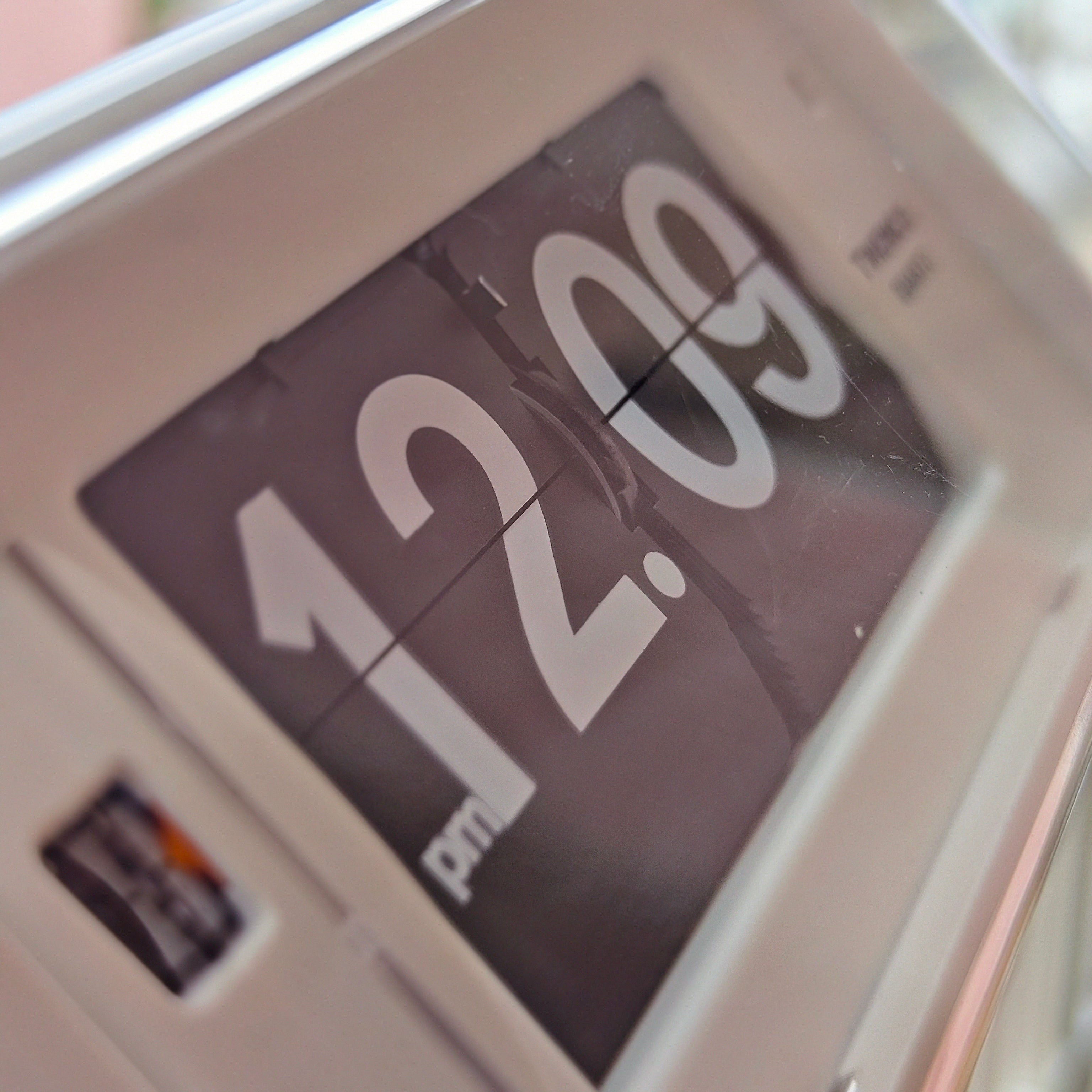
A clock is one of the few objects in a home that is both functional and decorative. It tells time, but it also shapes the feeling of a space. A large wall clock can become the visual center of a room, while a desk clock often acts as a subtle detail that adds personality without overwhelming the environment.
Choosing between a wall clock and a desk clock is not only about preference—it’s about proportion, layout, and how you want a room to feel.
If you are deciding where a clock belongs in your home or workspace, here are the key things to consider.
1. Start with Room Size
The easiest rule: larger spaces usually need larger visual anchors.
Small Rooms (Bedrooms, Compact Offices, Shelves)
Desk clocks often work better because they:
-
Take up minimal space
-
Reduce visual clutter
-
Add character without dominating the room
-
Pair easily with books, lamps, or décor pieces
A minimalist bedside setup with a flip clock, warm lighting, and a book often feels calmer than adding another object to the wall.
Best for:
-
Nightstands
-
Home offices
-
Entryway consoles
-
Floating shelves

Medium to Large Rooms (Living Rooms, Open Spaces)
Wall clocks help fill empty vertical space and create balance. For a broader shortlist by room size, display type and placement, see our guide to choosing the best clock for a living room.
A wall clock works well when:
-
The wall feels visually empty
-
Furniture below needs an anchor point
-
The room has high ceilings
-
You want the clock to become part of the décor statement
Large wall clocks are often used above:
-
Sofas
-
Sideboards
-
Dining areas
-
Fireplace mantels
2. Think About Viewing Distance
Ask yourself:
How far away will you read the time?
A desk clock is designed for close viewing.
Examples:
-
Beside a bed
-
On a work desk
-
Kitchen countertop
Wall clocks are intended for quick visibility across a room.
If you frequently check the time from several meters away, a larger wall display may simply be more practical.
3. Decide Whether the Clock Should Blend In or Stand Out
Every room needs visual hierarchy.
Some objects become the focus.
Others support the atmosphere.
Choose a Desk Clock if You Want:
-
Subtle design accents
-
Layered styling
-
Cozy, lived-in spaces
-
Retro or minimalist setups
Desk flip clocks often complement interiors rather than dominate them.

Choose a Wall Clock if You Want:
-
A statement piece
-
Strong architectural balance
-
Empty walls to feel intentional
-
Bold contrast in minimalist spaces
A large clock on a plain wall can function almost like artwork.
4. Match the Clock with Furniture Scale
One common mistake:
Buying a clock without considering surrounding furniture.
Examples:
A small desk clock beside a large walnut bookshelf may disappear visually.
A huge wall clock above a narrow console can feel disproportionate.
Try matching clock scale with nearby objects:
| Furniture | Suggested Clock Type |
|---|---|
| Bedside table | Small desk clock |
| Office desk | Desk clock |
| Floating shelf | Compact desk clock |
| Large sofa wall | Medium–large wall clock |
| Dining wall | Wall clock |
| Wide sideboard | Wall clock or oversized desk clock |
Think in terms of balance, not just dimensions.
5. Consider the Mood of the Space
The type of clock changes the atmosphere.
Desk Clocks → Personal & Intimate
They often feel:
-
Warm
-
Quiet
-
Nostalgic
-
Collected over time
This is why analog flip clocks fit bedrooms and workspaces so naturally.

Wall Clocks → Open & Structured
They often create:
-
Order
-
Presence
-
Symmetry
-
Architectural definition
Large clocks can make rooms feel more organized.
6. For Minimalist Homes: Sometimes Smaller Wins
Minimal interiors are often mistaken for empty interiors.
In reality, minimalist spaces rely heavily on carefully chosen objects.
One thoughtfully placed desk clock can provide enough visual interest without adding noise.
Especially in bedrooms, smaller analog clocks may feel less intrusive than oversized wall pieces.
Final Thoughts: Choose Based on Space, Not Trend
There is no universally “better” option between wall clocks and desk clocks.
The right choice depends on:
✓ Room size
✓ Viewing distance
✓ Existing furniture
✓ Desired atmosphere
✓ Whether you want the clock to stand out or quietly belong
A good clock should feel proportional—as if it was always meant to be there.

Because the best timepieces do more than tell time. They help shape how a room feels.