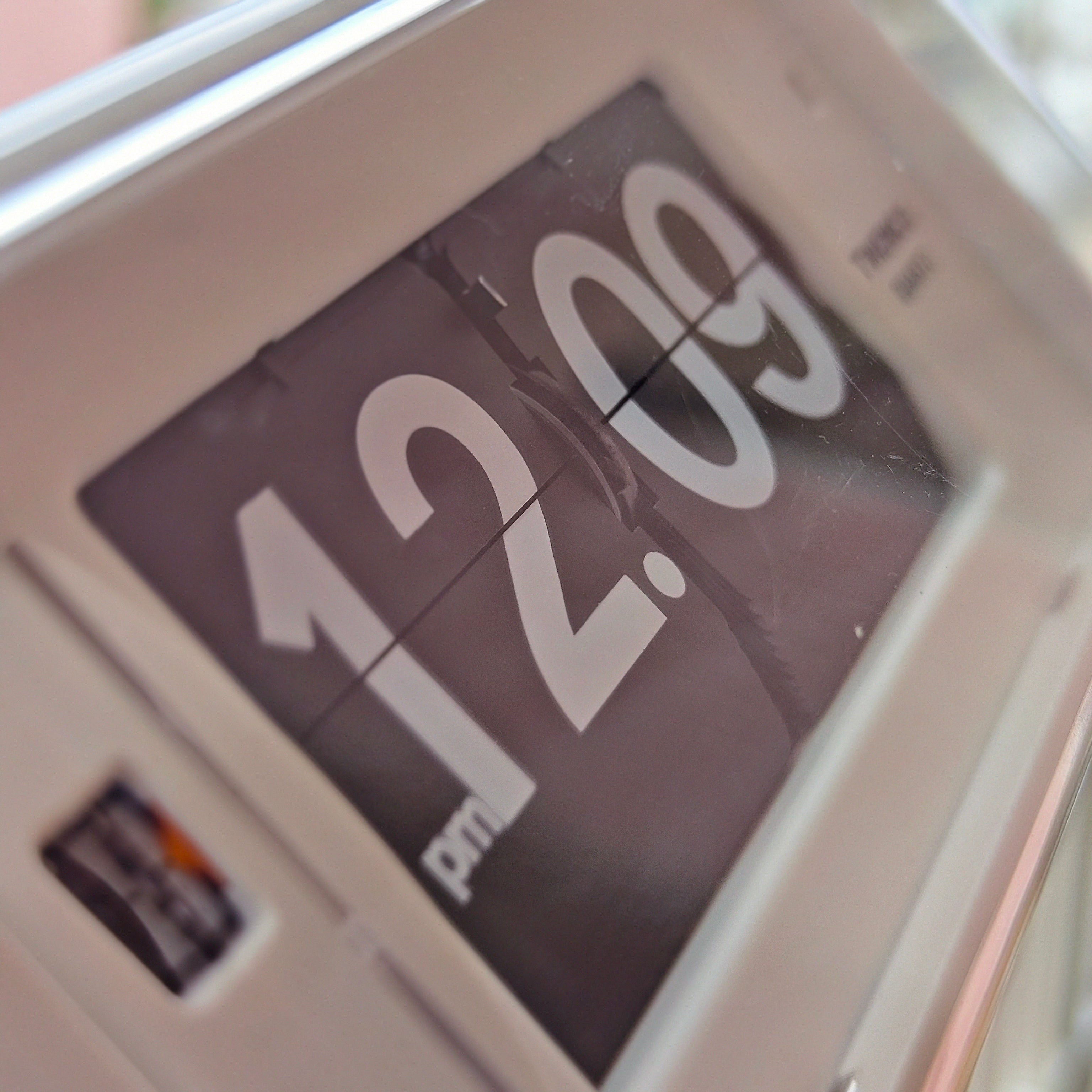
Most clocks simply show the time. Some display the date. But a few are designed to track something far more complicated: the irregular rhythm of our calendar itself.
That is where the perpetual calendar comes in.
If you own—or have looked into—certain Twemco flip clocks, you may have seen the term Perpetual Calendar and wondered what it actually means. Does the clock know when February has 29 days? Does it adjust automatically every year?
The short answer: yes, within its designed cycle.
Let’s break down how perpetual calendars work, and why they remain one of the most interesting features in analog timekeeping.
What Is a Perpetual Calendar?
A perpetual calendar is a system designed to automatically display the correct:
- Day of the week
- Date
- Month
- Sometimes year
…without requiring manual adjustment for months with different lengths.
Unlike a standard calendar clock, a perpetual calendar understands that:
- April has 30 days
- May has 31 days
- February usually has 28 days
- Leap years create February 29
The mechanism advances automatically.
In traditional horology, perpetual calendars are considered one of the most sophisticated complications in mechanical watches because they replicate calendar logic through gears and cams.
Why Leap Years Make Calendars Difficult
Our calendar is based on Earth’s orbit around the sun:
One year ≈ 365.2422 days
Because the number isn’t exactly 365, an extra day is added roughly every four years:
February 29 → Leap Year
But there are exceptions:
A year is a leap year if divisible by 4
Except years divisible by 100
Unless divisible by 400
Examples:
✅ 2024 = Leap year
✅ 2028 = Leap year
❌ 2100 = Not leap year
✅ 2000 = Leap year
This irregularity is why automatic calendars are surprisingly complex.

How Twemco’s Perpetual Calendar Works
Certain Twemco models—especially calendar flip clocks—include a mechanically programmed perpetual calendar mechanism.
Rather than relying on internet updates or software, the clock uses an internal gear sequence designed around repeating calendar cycles.
The mechanism tracks:
- Day progression
- Month length
- Leap year occurrence
- Automatic rollover between months
That means the clock can move from:
February 28 → February 29 → March 1 (during leap years)
or
February 28 → March 1 (non-leap years)
without user adjustment.
This is one reason many collectors appreciate Twemco clocks: they combine analog display with surprisingly intelligent internal engineering.
Which Twemco Models Have Perpetual Calendar Functions?
Not every Twemco clock includes this feature.
Models displaying full calendars (day / date / month) are the ones associated with perpetual calendar systems, such as:
- Twemco BQ-38
- Twemco QD-35
- Twemco BQ-12
Time-only models generally do not use perpetual calendar mechanisms.
Examples of time-only clocks:
- Twemco QT-30
- Twemco BQ-50

Does “Perpetual” Mean Forever?
Not exactly.
Many perpetual calendar systems are engineered around a long repeating cycle (often several years or decades). They correctly account for normal leap years but may eventually require adjustment over extremely long periods.
For everyday use, however, the clock effectively handles calendar changes automatically.
In practice, owners rarely need to reset the date.
Why People Still Love Perpetual Calendar Flip Clocks
The appeal is not only convenience.
A perpetual calendar flip clock turns time into something physical:
Minute → Hour → Day → Month → Year
Every transition flips mechanically into place.
Unlike smartphones, where dates update invisibly, perpetual calendar clocks make time feel tangible.
That is part engineering, part nostalgia, and part design object.
Final Thoughts
A perpetual calendar is essentially a clock’s attempt to understand the rules humans created for measuring time.
What makes Twemco interesting is that this logic is expressed through flipping panels and internal mechanisms rather than apps or software updates.
The result is a rare combination:
Analog appearance + automatic calendar intelligence
And perhaps that is why decades later, perpetual calendar flip clocks still feel surprisingly futuristic.