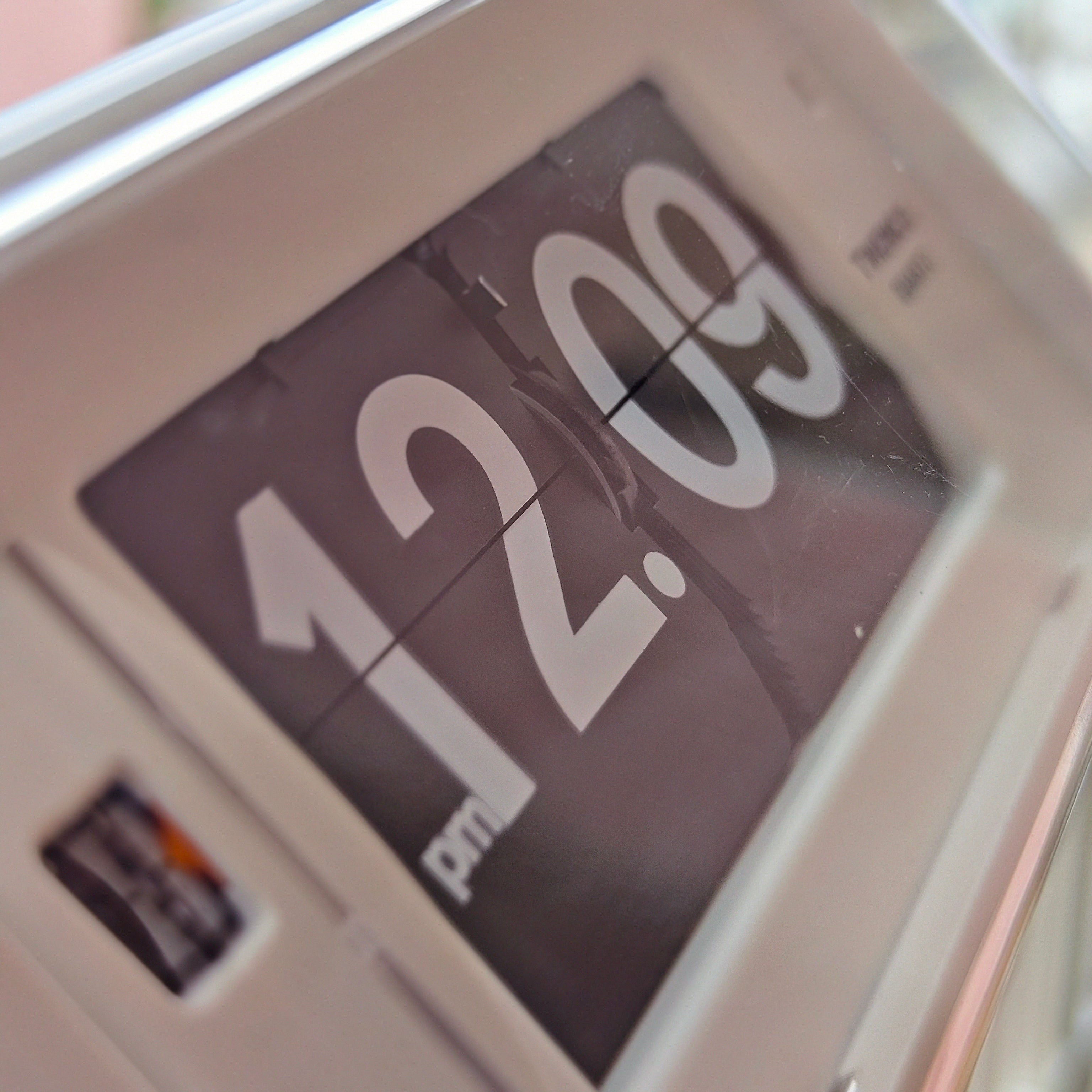
Understanding the Mechanics of Quartz Clocks
Look at the watch on your wrist or the dial on your kitchen wall. Before the first commercial Seiko watch debuted in 1969, keeping perfectly accurate time required heavy pendulums and complex gears. Today, a microscopic piece of rock handles the job, vibrating tens of thousands of times per second just so you aren't late for your morning meeting.
Why did this tiny mineral replace traditional mainsprings in nearly 90% of household timekeepers, according to historical industry data? It permanently solved a frustrating daily hurdle known as time drift (losing or gaining minutes over a few days). When watchmakers compared mechanical versus electronic movement accuracy, they realized physical springs inevitably unwind and lose their precise rhythm.
By contrast, a standard battery provides a tireless energy source that keeps clock quartz "ringing" flawlessly like a microscopic tuning fork. Applying a small electrical zap to the stone causes a rapid oscillation (vibrating back and forth), anchoring everyday quartz timing to a steady, invisible beat.

The Squeeze-Zap Effect: How a Tiny Stone Generates Perfect Timing
Look closely at the hands of a small quartz clock ticking in your kitchen. You already know a standard battery gives it energy, but batteries only push out a steady, continuous stream of power. To track seconds accurately, that steady stream needs a pacemaker to chop it into perfect beats.
This is where a hidden superpower called the piezoelectric effect (the ability to turn pressure into electricity, and vice versa) comes in. If you physically squeeze a piece of quartz, it generates a tiny electrical spark.
The reverse is also true, which is the secret behind every modern quartz regulator clock. When the battery zaps the tiny crystal with electricity, the stone physically bends and bounces back. It acts just like a microscopic tuning fork, throbbing with incredible frequency stability (keeping a perfectly steady rhythm).
As long as the battery keeps delivering tiny kicks, the crystal pulses at a remarkably reliable pace. Those steady physical vibrations are exactly what your device counts to stay synchronized.
Why 32,768 Hz is the Magic Number for Your Wrist
Tapping your finger thousands of times a second is impossible for humans, but it is effortless for quartz. When a battery zaps the crystal, it vibrates at a highly specific speed: exactly 32,768 times every single second. This 32,768 Hz frequency is not just a random scientific measurement. To the miniature computer hidden inside your watch, it is the absolute perfect number to track the passage of time.
That microchip, known as an integrated circuit oscillator, acts as the calculating brain of your quartz timer. Its primary job is to count those lightning-fast physical vibrations and translate them down to a relatable human pace. Because basic computers process information in binary (using twos), they find it incredibly easy to simply chop numbers in half.
Here is how the chip creates a single second through fifteen perfect mathematical cuts:
-
The counting circuit starts with the initial 32,768 pulses.
-
It cuts that number in half to 16,384, then half again to 8,192.
-
It repeats this exact division by two precisely thirteen more times.
-
The fifteenth and final cut leaves a result of exactly one electrical pulse.
When the chip produces that one final pulse, it sends a tiny jolt to a microscopic stepping motor. This motor physically nudges the gears, making your second hand click forward one space. However, this flawless mathematical sequence relies entirely on a stable power source.
Keeping the Beat: Maintaining Your Battery-Powered Timepiece
Even with perfect internal math, quartz watches lose time eventually. The culprit is often the weather. Think of a guitar string; when it gets hot, the material expands and the musical note goes out of tune. A quartz crystal behaves similarly. The impact of temperature on crystal stability means a ten-degree environmental shift can physically alter how fast the stone vibrates, throwing off the computer's count by a few seconds every month.
Beyond temperature, the average lifespan of quartz movements depends on their internal build quality and the tiny power plant inside. While a well-made mechanism can run for decades, a forgotten, dead battery can easily destroy it. As cheap batteries age, they can oxidize and leak corrosive acid onto the delicate circuit board. Committing to basic battery-powered timepiece maintenance is essential to protect these microscopic gears from permanent damage.
To protect your investment, follow this simple routine:
-
Choose the correct battery: Use high-quality silver-oxide cells instead of standard alkaline to prevent acid leaks, especially in vintage quartz.
-
Clean the contacts: Gently wipe the metal connection tabs during a battery swap to remove invisible oxidation.
-
Mind the placement: Store your clock away from drafty windows or heating vents to maintain optimal thermal stability.
Yet, even with meticulous battery care, physical glitches can still interrupt the rhythm.
Fixing the Ticking: Troubleshooting Skipping Hands and Silent Movements
Notice your wall clock ticking twice in place or struggling to push its pointer uphill? This frustrating behavior usually means you need to start troubleshooting a skipping second hand. When the tiny motor lacks enough battery power or faces mechanical resistance—like two metal hands physically rubbing together—it stutters. Always check for a fresh battery first, then gently bend the hands apart if they touch.
Sometimes, regular motors just aren't strong enough. If your custom clock features hands longer than 12 inches, a standard mechanism will quickly burn out. You need a high-torque motor (a mechanism built with extra twisting power) to push that heavy weight. Thankfully, following a high-torque motor installation guide is simple; you just unscrew the center nut and swap the black box on the back.
If the relentless "tick-tick" sound keeps you awake, consider upgrading by replacing standard motors with silent sweep movements. A standard motor pauses every second, but a sweep motor pushes the hands in a continuous, smooth glide. Here is a quick comparison of standard ticking versus silent sweep movements:
-
Ticking (Stepping): Low power draw, noticeable clicking noise level, 1-2 year battery longevity.
-
Silent Sweep: Higher power draw, zero noise level, 6-12 month battery longevity.
A basic quartz movement replacement requires just a small pair of pliers and a few minutes of patience. While standard battery-powered movements are brilliant, engineers have developed self-sustaining technologies to keep these crystals vibrating indefinitely.

From Sunlight to Radio Waves: The Future of Precision Quartz
A basic quartz time clock is already a marvel. In a direct quartz versus automatic watch comparison, the mechanical reality is eye-opening. A traditional spring-powered watch might lose six seconds daily, while a standard quartz crystal drifts just fifteen seconds a month. But there is a catch: you still have to replace dead batteries. To solve this annoying chore, engineers created solar-powered timekeeping technology.
Imagine microscopic solar panels secretly built right beneath the face of your watch. This clever design catches ambient light—from the afternoon sun or your office desk lamp—and turns it into steady electricity. Instead of draining a disposable battery, that gathered light charges a special power cell that keeps the quartz crystal pulsing perfectly for decades. You get endless reliability without ever popping the back cover open again.
Even with infinite power, physical crystals can drift slightly over several years, but invisible radio waves fix this final flaw. Through radio-controlled time synchronization, your device listens for late-night broadcasts from incredibly precise atomic clocks across the country. It automatically adjusts its own hands while you sleep, completely eliminating the frustrating need for manual time setting during daylight saving changes.
Your Action Plan for Precision Timekeeping
That small piece of quartz is exactly why a standard $10 supermarket wall clock is often more accurate than a $5,000 luxury mechanical watch. By harnessing a vibrating crystal, everyday objects keep the modern world perfectly synchronized, silently ticking away in the background.
To keep that microscopic heartbeat strong, adopt a simple care routine. Start by swapping old batteries yearly before they leak and ruin the circuit. Next, protect your timepieces from extreme heat or freezing drafts, which can physically alter the crystal's delicate vibration. Finally, consider upgrading worn-out older clocks with fresh, modern movements to ensure precision. Each time you check the hour, you are relying on the steady, electric pulse of a mineral perfectly keeping your day on track.