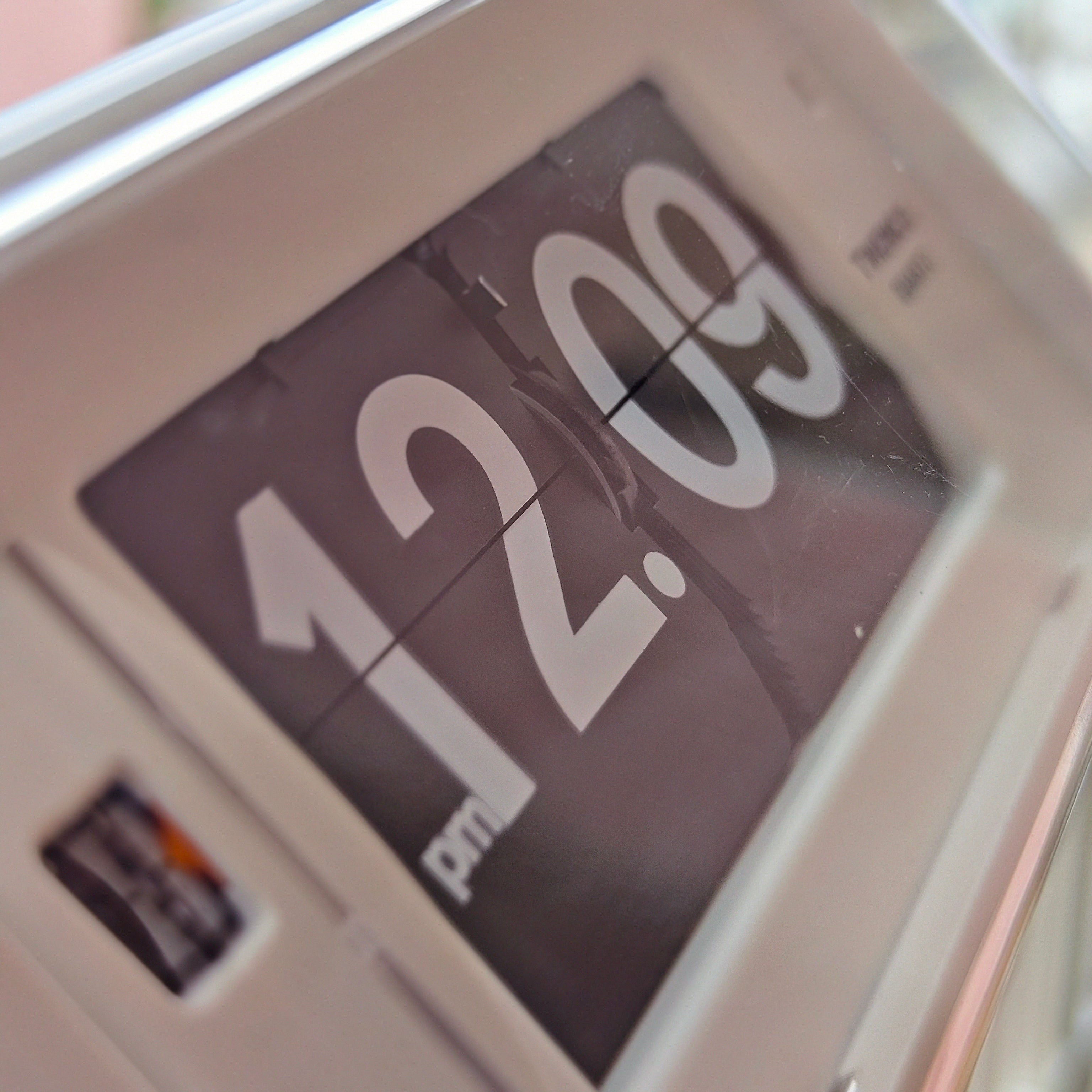
In a world where electronics are often replaced every few years, owning something that continues working for decades feels unusual. Phones become outdated, smart devices lose support, and cheap clocks eventually fail.
Yet many Twemco flip clocks purchased in the 1990s—or even earlier—are still operating today.
So why do some Twemco clocks last 20 years or more?
The answer is not luck. It comes down to engineering choices, material quality, and surprisingly simple maintenance.
Built for Continuous Use, Not Temporary Trends
Most consumer products are designed around fast replacement cycles.
Twemco clocks were designed differently.
Originally used in offices, transport environments, banks, schools, and commercial spaces, reliability mattered more than novelty. These clocks needed to display time continuously, day after day.
That commercial mindset shaped the construction:
- Durable plastic housings designed for long-term stability
- Efficient quartz movements engineered for continuous operation
- Mechanical flip systems with repeatable motion cycles
- Simple internal architecture with fewer failure points
Less complexity often means fewer things break.

The Flip Mechanism Is Surprisingly Gentle
People often assume moving parts wear out quickly.
Ironically, the opposite can be true.
The flipping action inside a Twemco occurs with controlled force rather than constant heavy movement. The mechanism advances incrementally and only performs brief actions when changing displays.
For many models:
- Minute cards flip once every minute
- Hour cards advance once every 60 minutes
- Date and calendar cards change once daily (calendar models only)
Even though the clock operates continuously, each individual component moves relatively infrequently compared with devices containing constantly spinning motors or cooling fans.
Efficient Battery Design Extends Lifespan
One common misconception is that durability comes from avoiding batteries.
In reality, many classic Twemco home and office models—including the QT-30, BQ-50, BQ-12, and QD-35—are powered by standard alkaline batteries.
The impressive part is efficiency.
Twemco movements are designed to consume very little power, meaning a single battery can often operate the clock for extended periods depending on model and usage.
Long battery intervals mean:
- Less frequent maintenance
- Reduced interruption to operation
- Lower overall wear from repeated battery changes
However, battery maintenance still matters.
Leaving exhausted batteries inside any clock for years increases the risk of leakage and corrosion.
A quick annual check helps preserve internal contacts. For the wider ownership picture, see our guide to flip-clock lifespan, wear and maintenance.
Material Choices Matter More Than Marketing
Durability is often invisible.
Premium longevity usually comes from parts users never think about.
Twemco clocks are known for:
- Thick molded casings
- Stable internal supports
- Rigid display components
- Consistent manufacturing tolerances
These details reduce wobble, misalignment, and structural fatigue over long periods.
The result:
A clock bought decades ago can still feel mechanically solid.

Fewer Smart Features = Fewer Failure Points
Modern devices often fail because of software rather than hardware.
Examples:
- Unsupported apps
- Firmware issues
- Connectivity problems
- Dead displays
- Charging circuit failures
A flip clock performs one task:
Display time.
That focused purpose becomes an advantage.
No operating system.
No updates.
No Wi-Fi failures.
No subscriptions.
Sometimes simplicity survives longer.

Environment Plays a Huge Role in Lifespan
Even durable clocks age faster under poor conditions.
To maximize longevity:
Avoid direct sunlight
Long-term UV exposure may discolor surfaces and accelerate material aging.
Keep away from excessive humidity
Moisture can affect battery compartments and internal components.
Use quality alkaline batteries
Cheap leaking batteries are responsible for many preventable failures.
Remove batteries during long storage
If storing for months or years, remove batteries completely.
Dust occasionally
Dust accumulation around moving areas may affect smooth operation over time.
Small habits add years.
Real Durability Is Measured in Everyday Use
Luxury is sometimes mistaken for rarity.
But durability is different.
A truly durable object survives ordinary routines:
Moving homes.
Office relocations.
Daily operation.
Changing trends.
Years of use.
Many Twemco owners keep the same clock through multiple life stages—not because they planned to, but because the clock simply keeps working.
That may be the strongest durability test of all.
Why People Still Buy Twemco Today
Modern buyers are not only purchasing a way to tell time.
They are buying:
- Long-term reliability
- Mechanical character
- Retro design that ages well
- Objects intended to be kept instead of replaced
In an era of disposable electronics, longevity itself becomes a feature.
Final Thoughts
A Twemco lasting 20+ years is rarely the result of one extraordinary component.
It is usually the combination of:
Efficient movement + controlled mechanics + durable materials + basic maintenance
That formula is less glamorous than modern technology—but often more enduring.
And perhaps that is why an analog flip clock can outlive many digital devices surrounding it.