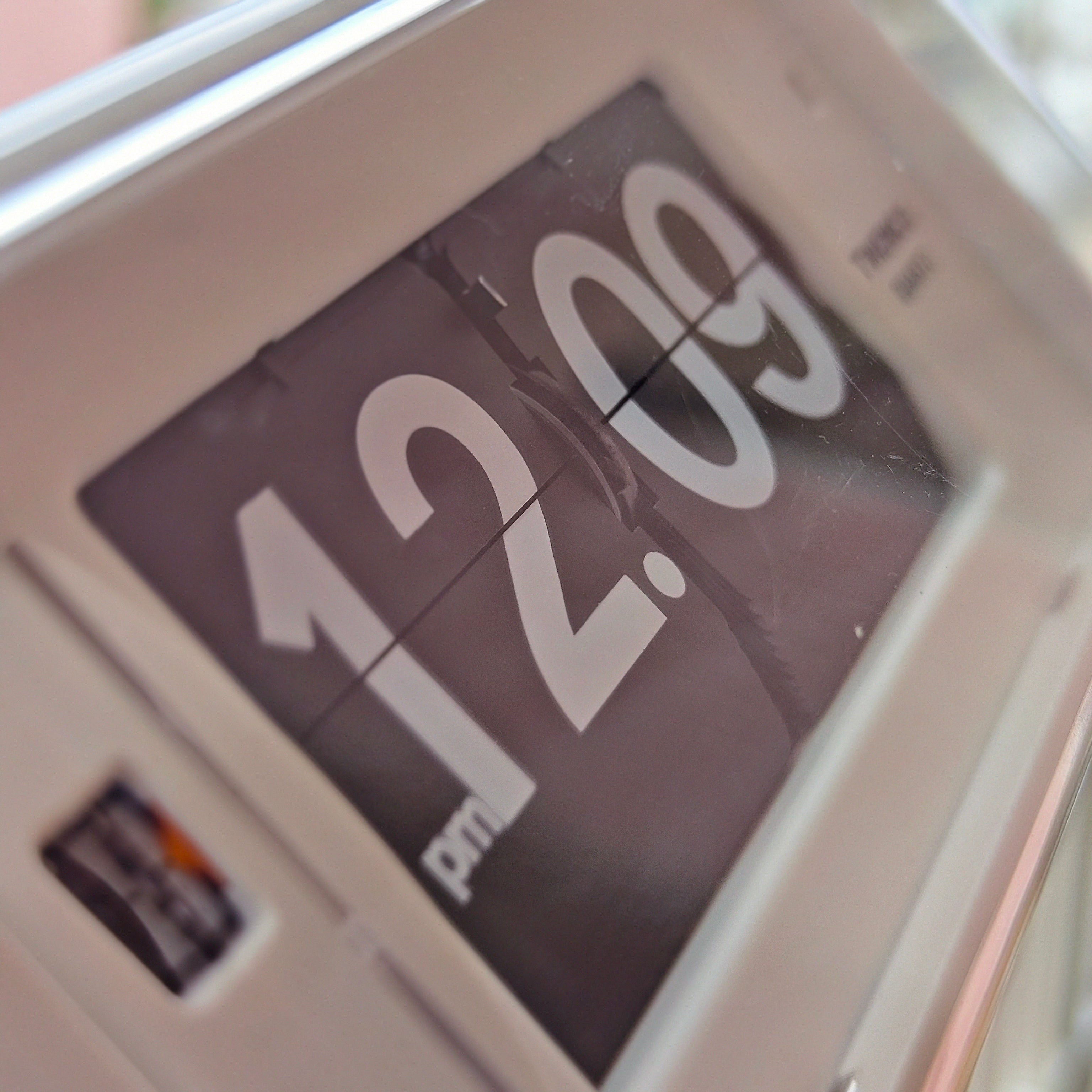
When selecting a high-end analog timepiece to anchor a room, the choice often comes down to two iconic mid-sized models: the Twemco BQ-50 and the Fartech AD-650. While both are celebrated for their kinetic charm and mechanical reliability, they represent fundamentally different approaches to horological display and engineering. Whether you are looking for the pure "flip" experience of a Twemco or the hybrid functionality of a Fartech auto-calendar, understanding these technical distinctions is key to choosing the right centerpiece for your studio, office, or living room.
Design Philosophy: Pure Minimalism vs. Hybrid Functionality
The visual identity of these two clocks reflects the distinct heritage of their respective brands.
- Twemco BQ-50 (The Pure Flip): Twemco is the undisputed master of institutional horology. The BQ-50 is a time-only masterpiece that embodies the "less is more" philosophy. It features large, high-contrast white-on-black flip cards for hours and minutes, accompanied by a small flashing LED second indicator. Measuring 290 x 145 x 105 mm, it is a medium-sized unit designed for versatility—equally at home on a minimalist desk or mounted as a subtle wall accent. For those seeking a Twemco with a full perpetual calendar, larger models like the BQ-12 or QD-35 are the preferred choices.
- Fartech AD-650 (The Hybrid Calendar): Fartech’s AD-650 takes a different approach by combining traditional analog timekeeping with a mechanical flip calendar. The time is displayed via a classic clock face with hands, while the day, date, month, and year are handled by automatic flip vanes. Measuring 240 x 240 x 100 mm, the AD-650 is actually the standard/entry size in Fartech’s auto-calendar lineup, serving as a compact alternative to their larger industrial units like the AD-640. You can explore the full range in the Fartech collection.
Engineering Truths: What Powers the Mechanism?
The internal engineering of these clocks is where their "statement" status is truly earned, though they rely on different power architectures to achieve their mechanical motion.
- Twemco BQ-50: Like all modern Twemco clocks, the BQ-50 is a battery-powered quartz movement. It utilizes a precision 32,768 Hz quartz crystal oscillator to keep time, sending timed electrical pulses to step a miniature motor. This motor releases a high-torque gear train that handles the weight of the 50 mm flip cards. This design ensures commercial-grade longevity, often running for 20+ years on standard batteries.
- Fartech AD-650: The AD-650 is a completely wireless, battery-powered electromechanical device. It utilizes a high-precision, Japanese-made SKP quartz motor to drive the analog hands. A secondary high-torque gear train handles the heavier calendar flip vanes, ensuring that the date changes are crisp and reliable without the need for an AC power cord.
Use Cases: Where Do They Belong?
Choosing between these two depends on your functional needs and the architectural context of your space:
1.The Executive Desk or Minimalist Wall (Twemco BQ-50): If you prioritize a "pure" flip experience and clean, institutional typography, the BQ-50 is the ideal choice. Its medium scale makes it perfect for home offices where desk space is at a premium but visual impact is still desired. It aligns perfectly with mid-century modern principles often featured in Architectural Digest.
2.The High-Traffic Hub or Industrial Loft (Fartech AD-650): If you need a comprehensive date-tracking tool alongside a traditional clock face, the AD-650 is the better fit. Its hybrid design provides the best of both worlds: the quick "glance-ability" of analog hands and the tactile mechanical change of a flip calendar. It serves as a rugged, industrial focal point in creative studios and open-plan lofts.
Both the Twemco BQ-50 and the Fartech AD-650 represent the pinnacle of analog engineering. Whichever you choose, you are investing in a timepiece that celebrates the physical rhythm of time in an increasingly digital world.