Choosing the right clock size above a sofa starts with three things: the sofa’s width, the available wall space and whether the clock will hang alone. There is no single diameter that works in every living room.
A clock should look intentional above the seating area without crowding nearby windows, shelves or lights. Before ordering, compare its actual dimensions on your wall—not just its appearance in a product photograph.

Should You Follow the Sofa Width or the Wall Size?
Start with the sofa, then check the surrounding wall.
The sofa gives the clock a visual reference. A wide, empty wall does not automatically require an oversized clock, particularly when the seating area occupies only part of it.
Measure the sofa’s full width and the clear wall area above it. Note any curtains, wall lights or architectural features that limit the arrangement. If the sofa sits off-centre, test the clock above the seating area rather than automatically centring it on the entire wall.
Does the Two-Thirds Rule Apply to Clocks?
Pottery Barn’s artwork guide suggests a display spanning roughly two-thirds of the furniture below, treating grouped pieces as one arrangement.
That is an artwork guideline—not a clock-sizing requirement. Applying it directly to a round clock above a 180cm sofa would suggest a 120cm diameter, which may be far more dominant than you want.
Use proportions to assess the overall composition. If a clock sits between two pictures, consider the group’s total width. If it hangs alone, judge its shape, visual weight and surrounding empty space.

Is a 30cm Clock Too Small Above a Sofa?
A 30cm clock may look modest above a wide sofa, especially when it is the only object on a large, bare wall. But it can still suit a deliberately understated arrangement or sit comfortably within a group of pictures.
For a practical comparison, make paper templates rather than choosing from measurements alone:
| Sofa width | Suggested template comparison |
| 180cm | Compare 30cm, 45cm and 60cm circles |
| 200cm | Compare 40cm, 50cm and 60cm circles |
| 240cm | Compare 50cm, 60cm and 80cm circles |
These are testing options, not prescribed sizes. If the smallest template feels right in your room, you do not need to size up simply because the sofa is wide.
Why Two Clocks of the Same Size Can Look Different
Diameter tells you the outer size, but not the whole visual effect.
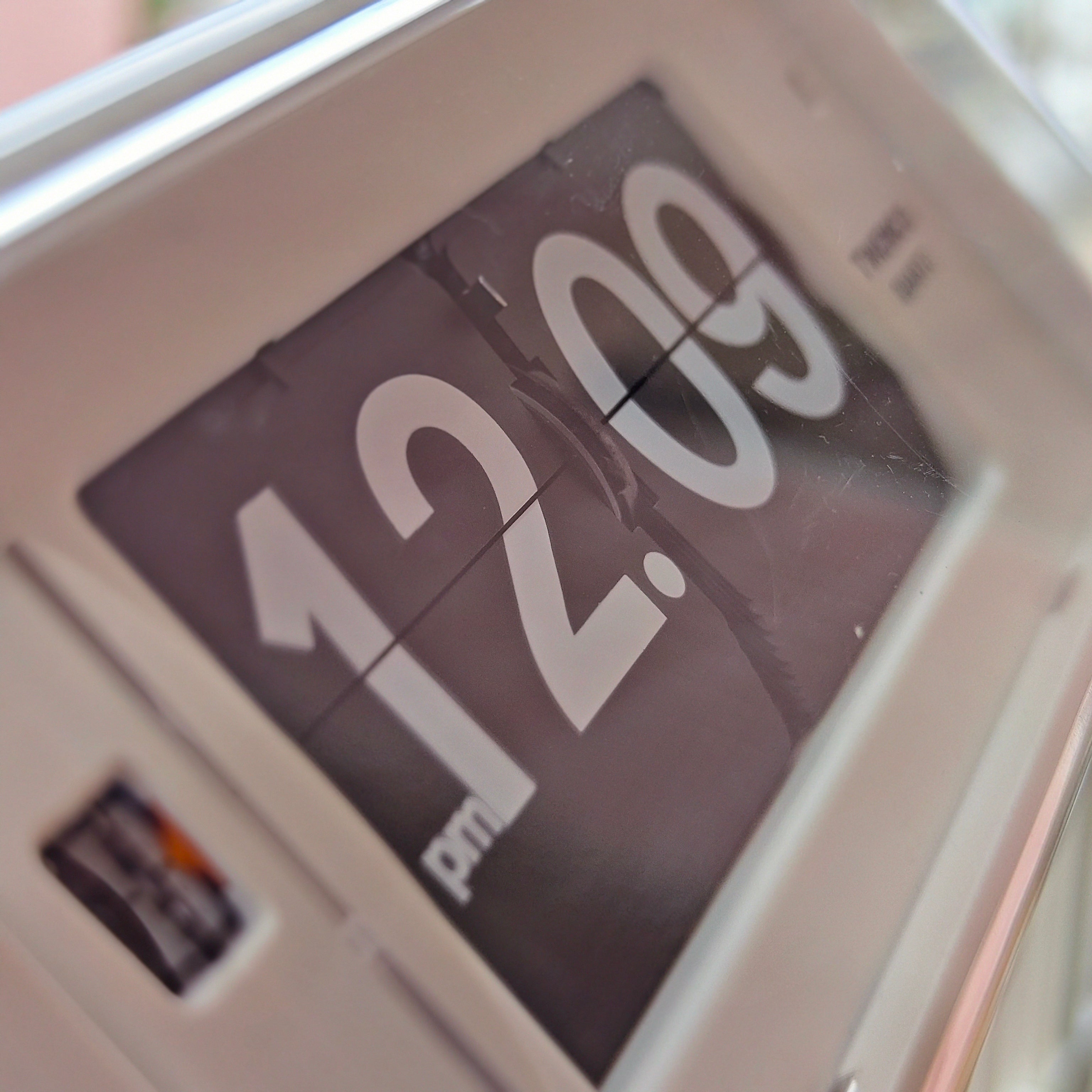
A dark clock with a thick frame can appear more prominent than a pale, open-frame design of equal diameter. A rectangular flip clock also fills the wall differently from a circular dial, so compare both width and height.
Check the readable display separately. A large case can surround a relatively small dial or set of numerals. Think about where you will actually read the time: the doorway, dining table or opposite chair. When the clock is behind the sofa, it may function mainly as decoration for anyone sitting there.
Test the Size Before Buying

IKEA’s wall-layout guide recommends paper templates for testing arrangements. The same approach is useful for a clock.

- Cut paper to the clock’s full outer dimensions.
- Position it using wall-safe tape suitable for your finish.
- Include templates for any neighbouring pictures.
- View the arrangement from the doorway and other normal viewing positions.
- Compare a smaller and larger version before deciding.
Use the template to assess scale; follow the clock manufacturer’s instructions for the actual mounting.
For placement and composition beyond sizing, see our guide to styling a clock above a sofa.
Frequently Asked Questions
Can a small clock work above a large sofa?
Yes. It can form part of a wider arrangement or create a restrained focal point. Test it on the wall before assuming it needs replacing.
Should the clock be wider than the sofa?
Usually, keeping it narrower is an easier starting point for a balanced arrangement. An unusually wide design needs careful testing against the available wall.
Should I measure the frame or just the clock face?
Use the full outer dimensions for wall planning. Check the dial or numeral size separately for readability.