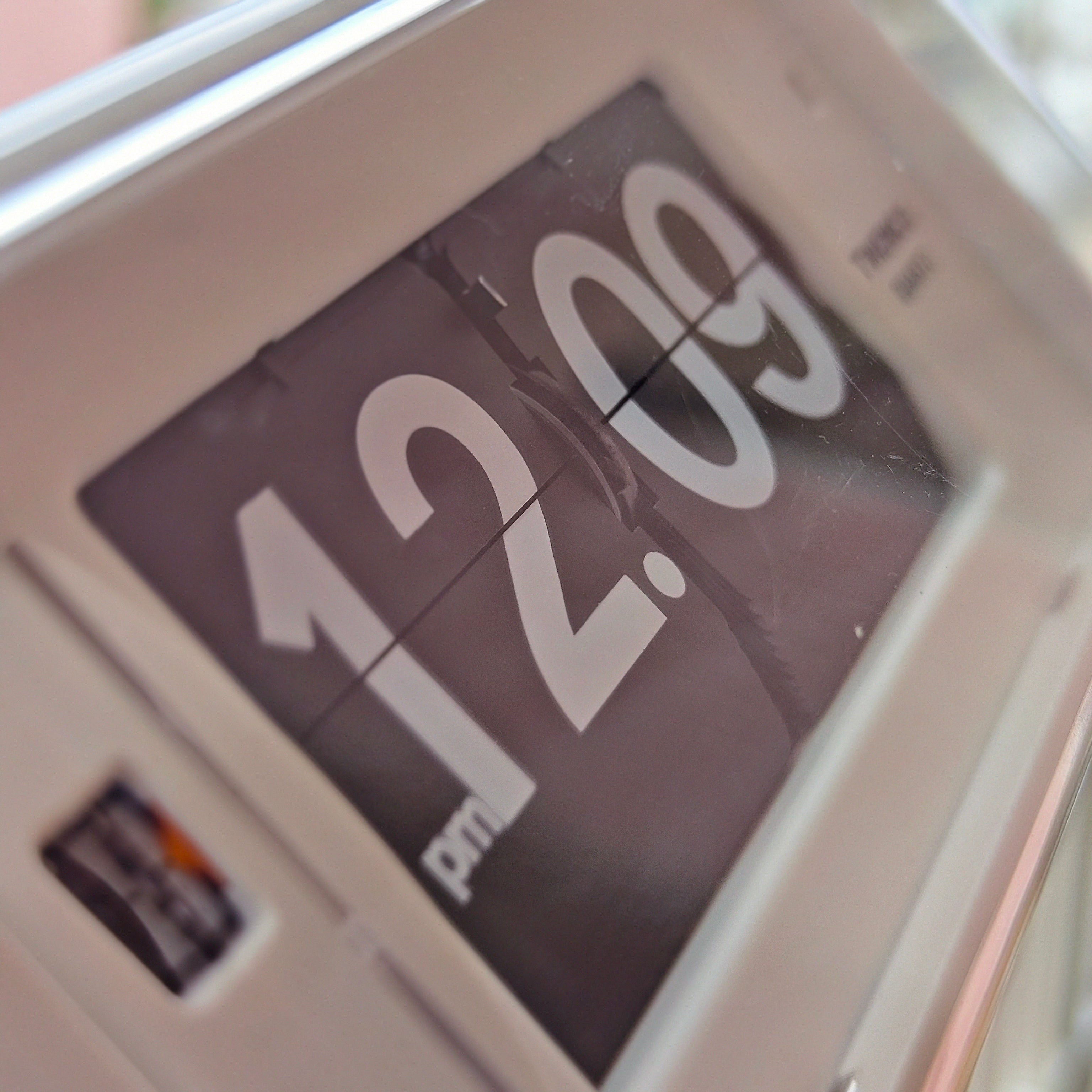
There's something deeply human about clocks. Long before smartphones told us the time to the second, clocks were the centrepieces of homes, town squares, and grand halls — objects of both function and beauty. Today, as interior design continues to evolve, the debate between vintage and modern clock aesthetics has never been more relevant. Whether you're drawn to the ornate craftsmanship of a bygone era or the clean lines of contemporary design, your choice of timepiece says a great deal about your personal style.
And then there are flip clocks — a category that defies easy classification, sitting beautifully at the crossroads of nostalgia and modern cool.
The Allure of Vintage Clock Design
Vintage clocks carry with them a sense of history — a feeling that time itself has weight and texture. From the elaborate gilded cases of 18th-century French mantel clocks to the warm mahogany of a classic grandfather clock, vintage timepieces were designed to impress as much as to inform.
Craftsmanship as a statement. In earlier centuries, clockmaking was considered a high art. Master craftsmen spent years perfecting their trade, and every clock was a testament to that dedication. Intricate engravings, hand-painted dials, and mechanical movements visible through glass panels were all hallmarks of the era. Owning a vintage clock wasn't just about telling time — it was about displaying wealth, taste, and cultural sophistication.
The warmth of natural materials. Vintage clocks lean heavily on wood, brass, and enamel. These materials age beautifully, developing a patina that only deepens their character over time. A well-preserved antique clock doesn't just sit on a mantelpiece — it anchors the room, drawing the eye and sparking conversation.
Nostalgia and emotional resonance. There's a reason vintage clocks are passed down through generations. They carry stories. A grandmother's carriage clock or a mid-century cuckoo clock inherited from a relative connects us to the past in a way that few objects can. For many collectors and homeowners, this emotional dimension is irreplaceable.
Enter the flip clock. Few vintage designs capture this sense of nostalgia quite like the flip clock. First popularised in the 1960s and 70s, flip clocks — with their satisfying mechanical flap as each minute turns — became icons of the era. You'd find them on office desks, hotel nightstands, and living room shelves across the world. Today, that same sound and motion carries an almost cinematic quality, instantly evoking a mood that no digital display can replicate.
The Appeal of Modern Clock Design
Modern clock design, by contrast, is defined by restraint. Where vintage clocks celebrate ornamentation, contemporary timepieces embrace simplicity — and in doing so, they achieve their own kind of elegance.
Form follows function. The modernist design philosophy holds that beauty emerges from purpose. Modern clocks strip away decorative excess and focus on clarity: clean dials, minimal numerals, and uncluttered faces that make reading the time effortless.
Materials of the moment. Contemporary clocks embrace a wider palette — brushed steel, matte aluminium, concrete, glass, and recycled composites. These choices reflect broader shifts in interior design, where industrial and Scandinavian influences have made raw, honest materials fashionable.
Versatility and adaptability. A well-chosen contemporary clock can complement almost any interior — from a minimalist loft apartment to a cosy Japandi-inspired living room. The understated nature of modern design means it rarely clashes, making it a safe and stylish choice for a wide range of spaces.
The flip clock, reimagined. Here's where things get exciting. The flip clock has undergone a remarkable revival in recent years, reborn not as a relic but as a design-forward object for the modern home. Today's flip clocks retain the iconic split-flap mechanism and that beloved audible tick, but are housed in sleek, refined enclosures — think matte black finishes, brushed aluminium frames, and minimalist typography. They look equally at home on a Bauhaus-inspired desk or a mid-century modern sideboard. The flip clock is no longer just nostalgic; it's genuinely contemporary.

Where the Two Worlds Meet
Some of the most compelling timepieces exist in the space between vintage and modern — and the flip clock is perhaps the finest example of this.
The flip clock as a design icon. Unlike most clocks, which are either clearly vintage or clearly modern, the flip clock occupies a unique cultural position. Its mechanism is analogue and mechanical, rooted in mid-20th century engineering. Yet its aesthetic — bold numerals, graphic simplicity, satisfying motion — feels entirely at home in today's interiors. It is, in the truest sense, a timeless design.
Neo-vintage design has emerged as a powerful trend, blending the warmth and character of vintage aesthetics with the precision of modern manufacturing. Flip clocks are at the forefront of this movement. A well-crafted flip clock on your desk or shelf doesn't just tell the time — it becomes a conversation piece, a mood-setter, and a subtle nod to an era when objects were built to last and designed to delight.

Why a Flip Clock Might Be Your Perfect Timepiece
If you're still deciding between vintage character and modern sensibility, a flip clock may be the answer you didn't know you were looking for. Here's why:
-
It has personality. The gentle flap of each passing minute is something no LED display or silent quartz movement can offer. It's tactile, audible, and alive in a way that makes you genuinely aware of time passing — without being intrusive.
-
It's a statement piece. Whether placed on a bedside table, a home office desk, or a living room shelf, a flip clock commands attention. It's the kind of object people notice and ask about.
-
It suits almost any interior. The best modern flip clocks are designed with versatility in mind. Clean lines and neutral finishes mean they complement both warm, vintage-inspired spaces and cool, contemporary ones.
-
It connects past and present. In a world of disposable gadgets and throwaway design, a flip clock is a reminder that some ideas are simply too good to leave behind.
Choosing the Right Clock for Your Space
- Consider your interior style. A flip clock works beautifully in both retro and modern settings — making it one of the most versatile choices available.
- Think about scale. Flip clocks are typically compact and desk-friendly, but larger split-flap display models make a bold wall statement.
- Prioritise what moves you. If the idea of watching time literally flip past appeals to you, a flip clock will bring daily joy in a way few objects can.
- Don't be afraid to mix eras. A flip clock paired with modern furniture, or placed on a vintage writing desk, creates exactly the kind of thoughtful contrast that makes a room feel curated rather than decorated.
Final Thoughts
Whether you're a devoted collector of antique timepieces or someone who appreciates the quiet confidence of modern design, one thing is certain: a great clock does far more than tell the time. It tells a story.
And if that story involves the satisfying flap of a flip clock marking another minute well spent — we think that's a story worth telling.
At Time Will Flip, the flip clock isn't just a product — it's our passion and our namesake. We've curated a collection of flip clocks that honour the design heritage of the original while meeting the standards of today's discerning home. From compact desk models to bold statement pieces, there's a flip clock in our collection for every space and every style.