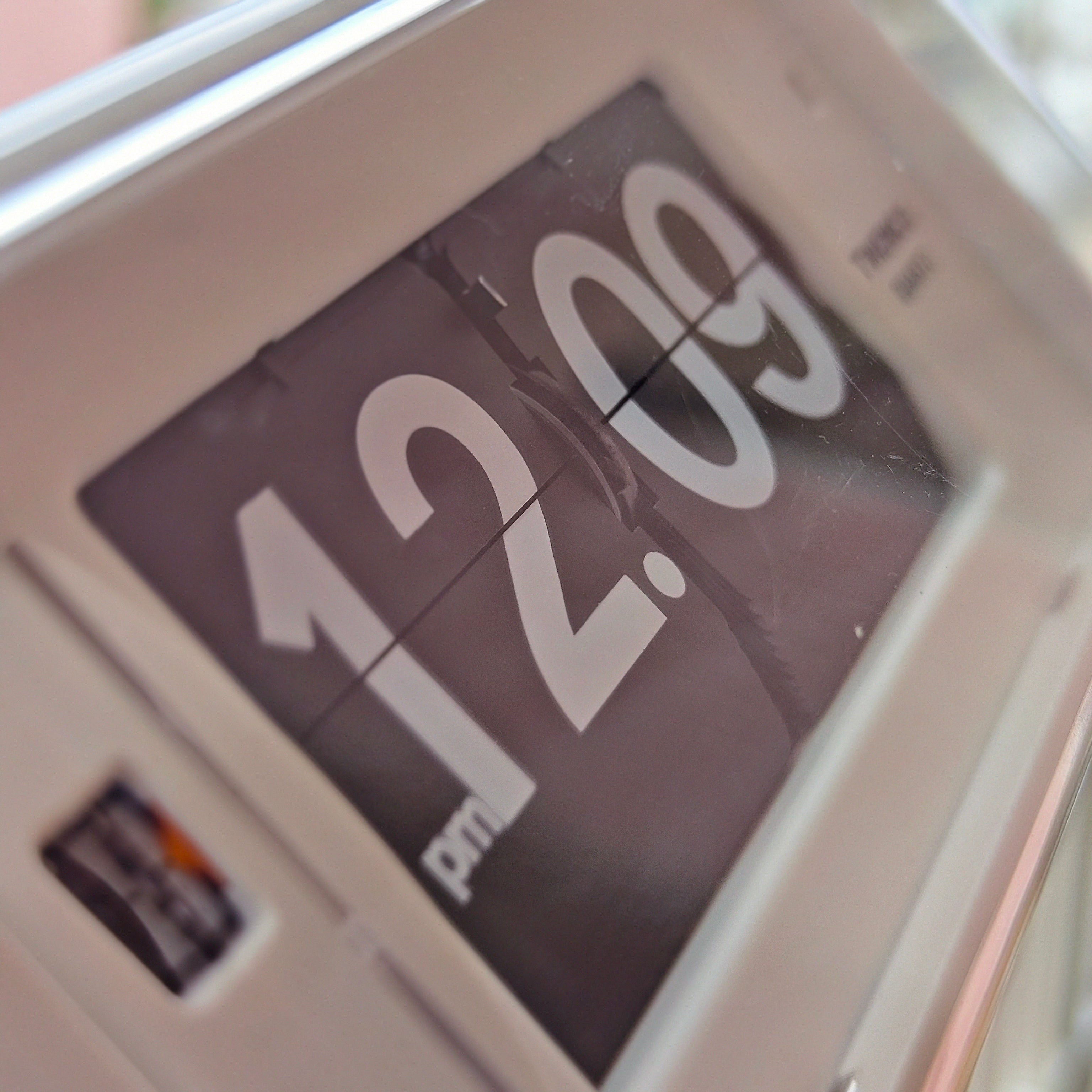
The Timeless Charm of Retro Flip Clocks
You know the sound: a soft, rhythmic clack followed by the faint hum of a motor and the nostalgic scent of warm plastic. Long before smartphones woke us up, the retro flip clock ruled the nightstand. Perhaps the most famous example is the Panasonic RC-6025, immortalized as the alarm that repeatedly tormented Bill Murray in Groundhog Day. That memorable pop-culture moment cemented the machine's cultural significance, turning an everyday household appliance into a lasting symbol of space-age cool.
At first glance, it might look like an ordinary aesthetic digital clock, but the magic lies in its tactile nature. These devices represent an era of "Physical Digital" timekeeping—meaning the numbers are actual printed plastic cards rather than electronic lights blinking on a flat screen. Instead of pixels instantly changing shape, a genuine vintage mechanism relies on a satisfying physical movement, much like a tiny Rolodex rapidly shuffling through a deck of cards. This mechanical reality creates a sensory experience that modern, silent reproductions simply cannot match.

According to mid-century design archives, this fascinating timekeeping method actually began on a massive scale. Before migrating to our bedrooms, the iconic split-flap display—a clever system where numbered, hinged cards rotate on a motorized wheel until a tension gear releases them—coordinated departures in noisy 1950s train stations and European airports. Shrinking those massive departure boards down to a tabletop size transformed public infrastructure into intimate home decor, allowing anyone to watch a satisfying time flip right from their bed.

Powering this intricate mechanical dance requires more than just a standard battery. The hallmark of an authentic vintage style flip clock is its synchronous AC motor, a specialized internal engine that uses the steady electrical pulse coming straight from your wall outlet to stay perfectly on schedule. This humble motor translates household electricity into a mesmerizing mechanical show, distinguishing a true horological treasure from a cheap modern simulation.
Why the 'Clack' Matters: Decoding the Split-Flap Mechanism
It looks digital, but it operates entirely in the physical world. Before glowing green screens or early vacuum tubes dominated nightstands, the retro flip clock offered a remarkably high-contrast alternative to traditional hands. This blend of bold numerals and moving parts sits at the core of mechanical vs digital timekeeping. Instead of illuminating tiny lights on a flat display, these vintage devices rely on individually printed cards. This creates a tangible, visual experience that leaves many casual admirers wondering exactly how split-flap displays work without a single computer chip in sight.
The secret behind this reliable precision starts directly at your wall outlet. While you already know the plug provides basic power, the clock actually uses the household electricity for something much more vital: pacing. Through synchronous AC motor timing, the clock's internal motor "hitches a ride" on the steady, 60-hertz alternating pulse of your home's electrical current. This frequency-based timing ensures the motor spins at a perfectly constant speed, permanently locked to the power grid's invisible rhythm rather than relying on fragile winding springs or dying batteries.
Translating that constant, humming spin into a precise 60-second jump requires a clever piece of engineering known as a cyclometer mechanism. If you picture the rotating numbered wheels on an old mechanical car odometer, you already understand the basic concept. Inside the clock casing, the synchronous motor slowly turns a central axle connected to a series of rotating plastic hubs, known as "drums." As the drum rotates, it acts as the crucial mechanical bridge between the smooth, continuous electrical spin and the sudden, segmented drop of the numbers.
Surrounding these internal drums are dozens of flexible plastic cards, affectionately called "leaves" by vintage collectors. The actual movement relies on a carefully choreographed dance of leaf tension and gravity. Every single minute, the clock completes a precise four-step mechanical sequence:
-
Tension build-up: A small retaining finger catches and holds the top leaf back while the drum continues to slowly turn, bending the stiff plastic.
-
Leaf release: The rotating drum finally reaches a precise angle where the retaining finger can no longer hold the bent card.
-
Gravity fall: The plastic leaf snaps downward in a fraction of a second, instantly revealing the top half of the next numeral.
-
Gear lock: A secondary mechanism clicks into place, holding the drum perfectly steady until the next minute cycle begins.
That sudden release creates the iconic, rhythmic "clack" that defines the vintage aesthetic. It is the satisfying sound of physical tension resolving into perfect time, leaving an auditory footprint that silent modern screens simply cannot replicate. Mastering this brilliant combination of electrical pacing and falling plastic allowed manufacturers to turn a simple bedroom utility into a mid-century masterpiece, leading directly to the icons of time: from Solari di Udine to the Panasonic RC-6025.
The Icons of Time: From Solari di Udine to the Panasonic RC-6025
While the mechanical ballet happening behind the numbers is fascinating, a flip clock’s appeal has always been as much about the casing as the clack. During the 1960s and 70s, placing one of these high-tech timepieces on your nightstand was a bold statement of modernity. The market quickly divided into two distinct design philosophies that still dominate vintage collecting today: the sleek artistic purity of Italian engineering and the feature-packed reliability of Japanese manufacturing.
Leading the charge for European elegance was the Solari di Udine Cifra 3, a masterpiece of Italian industrial minimalism. Designed in the late 1960s, it stripped away radios and extra dials to focus entirely on the pure passage of time, housed in a smooth, cylindrical plastic body. Collectors particularly hunt for early models featuring an "inverted" color scheme—crisp white numerals printed against deeply black plastic leaves. This high-contrast aesthetic wasn't just visually striking; the black cards were significantly harder to manufacture cleanly at the time, making those surviving pieces highly prized rarities among mid-century modern desk accessories.
Across the globe, Japanese companies took a completely different approach by turning the clock into an all-in-one bedroom command center. The legendary Panasonic RC-6025 model perfectly represents this utility-first mindset. Instead of stripping features away, they proudly added AM/FM tuning dials, sleep timers, and faux-woodgrain panels. Inside these bustling desktop dashboards beat the heart of Copal-brand motors—a specific, ultra-durable type of Japanese synchronous motor renowned among restorers for outlasting the very plastic casings that surrounded them.

Regardless of whether you preferred the artistic Italian cylinder or the rectangular Japanese radio combo, both styles leaned heavily into Space Age interior design. This late mid-century movement embraced brand-new manufacturing techniques, taking heavy inspiration from the Apollo missions and sci-fi optimism. Designers loved using injection-molded plastics to create futuristic silhouettes that looked right at home next to lava lamps, shag carpets, and molded fiberglass chairs.
If you are scouring thrift stores or estate sales today, you can easily spot an authentic piece from this era by looking for a specific combination of aesthetic choices. A true Space Age design era clock will typically feature these five undeniable markers:
-
Sweeping Curves: A lack of sharp, traditional ninety-degree corners, replaced by aerodynamic "bullet" or "capsule" shapes.
-
Tulip Bases: Clocks elevated on a single central stem or pedestal, resembling a miniature radar dish or a UFO.
-
Tinted Acrylic Windows: Smoked gray or amber plastic visors covering the split-flap display to reduce glare.
-
The Pilot Light: A tiny, continuously glowing orange neon bulb used to gently illuminate the falling numbers in the dark.
-
High-Gloss Finishes: Bright, primary-colored plastics—especially "rocket red" or "harvest gold"—that gleamed like a new car dashboard.

Securing one of these mid-century masterpieces brings a daily dose of tactile history straight to your bedside. However, running a fifty-year-old physical motor twenty-four hours a day inevitably comes with a few mechanical quirks. When the satisfying nightly rhythm turns into a grinding protest, or when 7:59 simply refuses to drop, you will need to give that vintage engine a little help.
Why is My Clock Losing Time? Troubleshooting Mechanical Hum and Stuck Leaves
The struggle of the "stuck leaf"—when 12:59 refuses to drop and become 1:00—is a rite of passage for vintage timekeeping enthusiasts. If you find yourself asking why your mechanical clock is losing time, the culprit is rarely a broken motor. Instead, these fifty-year-old machines usually suffer from gear binding. This common issue happens when decades of household dust and dried-out factory grease create enough physical resistance to overpower the clock's small internal engine. Just like a bicycle chain that hasn't been oiled in years, the moving physical parts inside your clock simply get too stiff to rotate freely, causing the minutes to lag behind.
Diagnosing the issue starts by listening closely to the sounds coming from the casing. A healthy flip clock produces a faint, steady hum, which is the sound of the synchronous motor at work. This motor relies on frequency conversion from your wall outlet to keep perfect time. However, if that gentle purr turns into a loud, strained grinding noise, you are likely dealing with a motor struggling against friction. Since these are high-voltage AC devices, always unplug the clock entirely before attempting any repairs to avoid a dangerous electrical shock.
Once the device is safely unplugged and the casing is removed, you can perform basic maintenance with a surprisingly simple setup. A beginner-friendly maintenance toolkit only requires three specific items:
-
Plastic-safe synthetic grease: Essential for keeping gears moving smoothly without chemically melting the delicate vintage components.
-
Compressed air: Perfect for gently blowing away decades of accumulated dust from the mechanical housing.
-
A non-conductive probe: A wooden or plastic tool, like a toothpick, used to carefully dislodge debris without scratching surfaces or conducting stray electricity.
Applying these tools correctly is the secret to successfully restoring vintage Copal models and their sleek European counterparts. Start by using your probe to carefully clear out debris trapped between the number cards, a technique often referred to as the "toothpick method." Once the physical dust is gone, apply tiny pin-drops of your synthetic grease to the points where the gears meet. The absolute golden rule of lubricating plastic gears safely is to avoid petroleum-based products like standard WD-40, which will rapidly degrade the original materials and turn a simple tune-up into a ruined clock.
Watching a freshly serviced motor spring back to life, confidently flipping from minute to minute without hesitation, is an incredibly rewarding experience. However, not everyone wants to wrangle with synthetic grease, high voltages, and fifty-year-old plastic just to enjoy that iconic retro vibe. Fortunately, the digital age offers a mess-free alternative to capture that exact same vintage magic on your modern screens.
The Buyer’s Checklist: Authentic Vintage vs. Modern Reproductions
Stepping away from the glow of your monitor to hunt down a physical piece of horological history is a thrilling shift. Whether you are scouring a dusty antique mall or browsing online auctions, the market is flooded with options that look remarkably similar at first glance. The primary challenge for any new collector is distinguishing an authentic vintage model from a modern reproduction. Original units from the 1970s carry a specific weight and mechanical soul that newer, mass-produced replicas simply cannot duplicate.
Today's market is packed with battery-operated vintage aesthetic timepieces that capture the look but completely miss the feel. These newer units often rely on cheap stepper motors—the tiny, silent electronic drives found in standard quartz wall clocks. Because they run on AA batteries rather than direct wall power, a modern retro clock or oversized retro clock will lack the warm, continuous hum of a true synchronous motor. While these modern replicas are perfectly fine if you need absolute silence in a bedroom, they lack the authentic heartbeat and the satisfying, heavy clack of falling plastic that collectors crave.
When examining a genuine mid-century unit, its physical imperfections actually become your best negotiation tools. Decades of sunlight exposure often cause UV damage, resulting in a distinct yellowing of the originally crisp white numbers or the clear plastic viewing window. Additionally, the tiny amber neon bulb meant to illuminate the dial at night has usually burned out after fifty years of continuous use. Rather than walking away, use these common signs of aging to haggle the price down, knowing that both yellowed plastic and dead bulbs are relatively simple weekend restoration projects.
Before handing over your cash, you must verify the clock's electrical voltage compatibility to avoid a fiery disappointment. Vintage flip clocks rely on the specific electrical pulse (measured in Hertz) of your home's wall outlet to keep accurate time. If you buy a beautiful vintage Panasonic imported from Japan or Europe and plug it directly into a standard American socket without a proper converter, it will either run at the wrong speed entirely or immediately fry the motor. Always check the metal stamped plate on the bottom for "120V 60Hz" if you live in North America.
To quickly separate a prized find from a broken paperweight, memorize the '30-Second Thrift Store Test' before your next hunt:
-
Listen: Plug it in and put your ear to the casing; you should hear the quiet, steady hum of a healthy motor.
-
Flip: Turn the time-setting dial manually to ensure the plastic flaps drop smoothly without catching or sticking together.
-
Smell: Give the back vents a quick sniff to check for the harsh, acrid scent of burnt coils, which indicates a dead, unfixable motor.
Once you have secured a healthy, humming piece of history, the next step is seamlessly integrating it into your room.
Styling the 'Physical Digital': Mid-Century Modern Placement and Lighting
Finding the perfect spot for your newly acquired vintage timepiece transforms it into a grounding element for your home. In a world where we constantly check a clock display on a screen, placing a moving mechanism in your living space provides what interior designers call an "analog anchor." By positioning a substantial, mechanical object in a highly visible area, you create a visual resting place that counters the stressful glare of modern digital devices. Whether sitting on a teak credenza or a minimalist floating shelf, the clock becomes a deliberate statement piece rather than just an appliance.

When styling a workspace, incorporating these mid-century modern desk accessories offers surprising psychological benefits known as tactile time management. Watching time pass as a physical movement—seeing a physical plastic card fall rather than pixels changing on an on-screen clock—helps the human brain process passing minutes more tangibly. To arrange the clock effectively, employ the decorator's "Rule of Three" by grouping the unit with a small potted succulent and a stacked pair of vintage books. This simple triad creates a balanced, low-tech zone that invites focus and prevents the heavy mechanical box from looking isolated or clunky.
Proper illumination ensures this inviting atmosphere translates seamlessly into the evening hours. Most authentic units feature a tiny neon bulb that casts a faint, amber hue, which pairs beautifully with warm-spectrum lighting from a nearby brass reading lamp. Actively avoid harsh, cool white LED bulbs in the same room, as they can wash out the nostalgic charm and make the vintage plastic housing appear cheap. If you managed to track down a vibrant, space-age piece, like a rare pink flip clock variant, softening the surrounding room light highlights the retro pastel color perfectly.
Ultimately, curating this physical-digital aesthetic is about designing an environment that honors history while serving your daily lifestyle. By thoughtfully combining balanced placement, intentional lighting, and a respect for tactile time, your vintage find becomes the undeniable focal point of the room.
Final Steps: Building Your Own Retro Timepiece Collection
A retro flip clock is much more than a neat prop from a classic movie. It represents an intricate dance of the split-flap system and the steady, rhythmic hum of a synchronized motor. Armed with the right knowledge, you are equipped to spot a genuine mechanical treasure and confidently differentiate it from a cheap modern replica.
Building a sustainable collection requires a structured approach to acquire high-value vintage clocks under budget. By pacing yourself, you avoid the common beginner trap of overpaying for broken machines. Follow this focused 30-day roadmap to guide your progress:
-
Week 1 (Research/Sourcing): Identify your ideal model and track daily prices on auction sites or local thrift boards to establish a realistic budget.
-
Week 2 (Maintenance Kit): Gather your basic restoration supplies, including a soft microfiber cloth, a small can of compressed air, and plastic-safe lubricant.
-
Week 3 (The Hunt): Make your purchase, prioritizing a digital flip clock with a highly functional motor over one with a perfect but easily replaceable outer casing.
-
Week 4 (Setup/Styling): Place your clock in its new home and join a global community of enthusiasts for part sourcing and ongoing support.
As you bring your timepiece to life, remember that dust is the greatest enemy of these small mechanical wonders. A quick blast of compressed air into the housing every few months will preserve the mechanism, preventing the plastic flaps from sticking and ensuring the clock's longevity. Pairing this simple maintenance habit with the collective wisdom of online collector forums provides a vital safety net whenever you need advice on a stubborn gear.
The next time you hear that distinct, heavy drop of a plastic leaf marking the hour, you won't just hear the passage of time. You will hear the heartbeat of an era. Keep the magic alive by finding your own piece of history, plugging it in, and enjoying a classic mechanism as it flips back to life.