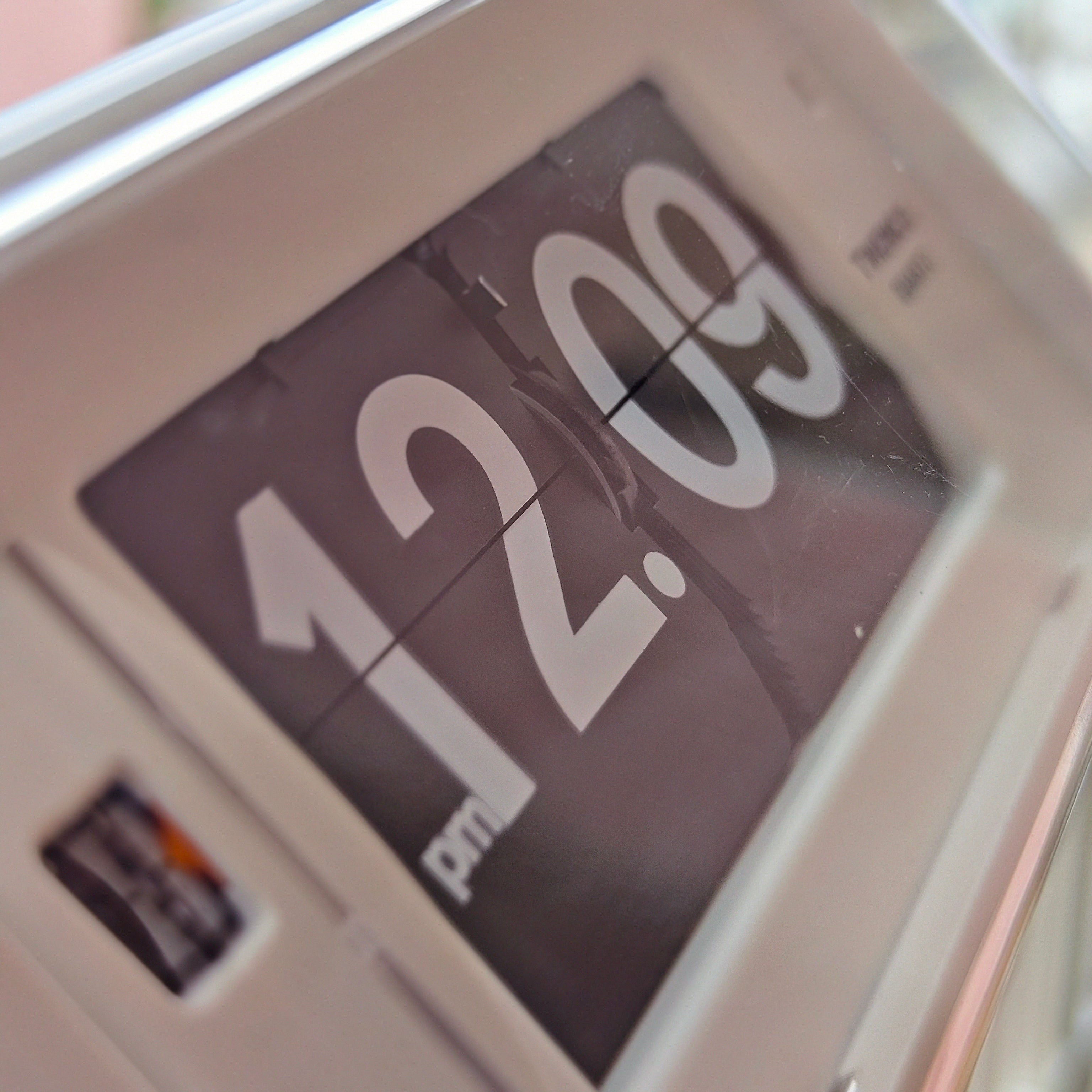
History, Iconic Models, Design Legacy, and Why Twemco Still Defines the Flip Clock Category
When people search for a premium flip clock, one name appears repeatedly: Twemco.
For collectors, interior designers, productivity enthusiasts, and lovers of Mid-Century Modern interiors, the brand occupies a unique position. Unlike many retro-inspired products that imitate vintage aesthetics, Twemco has spent decades manufacturing clocks that remain remarkably consistent with their original identity.
Today, in a market filled with smart displays and disposable electronics, Twemco continues producing mechanical-style flip clocks that prioritize legibility, durability, and timeless design.
This guide explores the history of the brand, why Twemco became iconic, popular models, design philosophies, maintenance considerations, and why these clocks remain relevant in modern interiors.
What Is Twemco?
Twemco is a clock manufacturer best known for producing automatic flip clocks featuring mechanical-style rotating number cards.
The company gained recognition through clocks used in:
-
Banks
-
Government offices
-
Airports
-
Factories
-
Schools
-
Railway environments
-
Reception areas
-
Homes and design studios
Their clocks became associated with reliability and clarity rather than decoration alone.
Many people first encountered a Twemco clock without realizing it—mounted on a wall in a public institution or displayed behind a reception desk.
Over time, these functional tools evolved into design objects.

The Origins: Why Flip Clocks Became Popular
To understand Twemco, it helps to understand the era that shaped flip clocks.
During the mid-20th century, modernism emphasized:
-
Function over ornament
-
High readability
-
Industrial efficiency
-
Clean geometric forms
-
Standardization
Timekeeping devices needed to be readable from a distance and durable enough for constant use.
Flip clocks solved several problems:
Compared with traditional analog clocks:
Pros:
-
Easier to read quickly
-
Better visibility from afar
-
More precise display
-
Stronger institutional appearance
The result was a visual language strongly connected to modern transportation systems and professional environments.
Twemco adopted this philosophy and kept it alive long after many manufacturers abandoned the category.

Why Twemco Became an Authority Brand
Many brands produce clocks.
Few become synonymous with an entire product category.
Think:
-
Vacuum cleaner → certain household brands
-
Instant camera → specific photography brands
-
Flip clock → often Twemco
Twemco built authority through several factors.

1. Consistency Across Decades
Design trends change rapidly.
Minimalism evolves.
Technology evolves.
Twemco’s visual identity remains surprisingly stable:
Large numerals
High contrast
Rectangular forms
Simple typography
Mechanical movement cues
Because of this, a newer model often feels connected to models produced decades earlier.
That continuity creates trust.
2. Functional Design First
Many decorative clocks prioritize appearance.
Twemco historically prioritized usability:
Large display
Numbers remain visible from across rooms.
Instant readability
No interpretation required.
You do not calculate hand positions.
You read immediately.
Contrast
Black-and-white combinations improve visibility.
These practical decisions accidentally became aesthetic strengths.
3. Durability Reputation
Collectors often mention longevity.
Older Twemco units still operate after many years with proper care.
Durability contributes heavily to brand authority because products become intergenerational rather than disposable.
4. Institutional Use Created Credibility
Products used in public environments gain unconscious trust.
Seeing clocks repeatedly in:
banks
schools
transport spaces
creates familiarity.
Familiarity often becomes authority.

Iconic Twemco Models
Some models appear repeatedly in design communities and collector discussions.
Twemco BQ-12
Possibly among the most recognizable.
Known for:
-
Compact size
-
Calendar + time display
-
Desk placement suitability
-
Retro office appearance
Popular for:
Home offices
Study rooms
Minimalist desks

Twemco BQ-38
A larger calendar clock often appreciated for stronger visual presence.
Suitable for:
-
Studios
-
Living rooms
-
Reception spaces

Twemco QT-30
Often referenced in discussions around wall-mounted flip clocks.
Works well within:
Industrial interiors
Mid-century environments
Creative workspaces
Twemco QD-35
Combines date and time functionality with a distinctly institutional aesthetic.
Many people enjoy its “airport schedule board” feeling.
Why Designers Still Use Twemco Clocks in 2026 Interiors
Interior trends increasingly move toward tactile objects.
People spend more time with screens than ever before.
Physical products create contrast.
Twemco clocks contribute:
Visual rhythm
The flip action introduces subtle movement.
Texture
Unlike digital displays, flip clocks possess:
Mechanical character
Material presence
Sound
Reduced visual fatigue
The display remains static most of the time rather than constantly glowing.
Nostalgia without feeling outdated
Good design survives trends.
Twemco often feels retro and contemporary simultaneously.
Twemco and Mid-Century Modern (MCM) Interiors
Twemco integrates naturally with MCM styling because both emphasize:
Clean geometry
Practical function
Warm materials
Timeless utility
A Twemco clock pairs well with:
Walnut furniture
Metal desk lamps
Leather seating
Neutral palettes
Vintage shelving
The result feels intentional rather than decorative.
Twemco vs Generic Flip Clocks
People often ask whether all flip clocks are essentially the same.
Not necessarily.
Differences usually include:
| Factor | Premium Brand Models | Generic Alternatives |
|---|---|---|
| Material quality | Higher consistency | Varies |
| Long-term durability | Often stronger | Unpredictable |
| Design heritage | Established | Limited |
| Replacement support | Better | Inconsistent |
| Collectability | Higher | Lower |
Brand authority accumulates slowly.
That accumulated trust becomes part of the product value.
Are Twemco Clocks Mechanical?
A common misunderstanding:
Many assume Twemco clocks are fully mechanical.
In reality, most models use electric movement systems combined with flipping display mechanisms.
The satisfying flip remains physical.
The experience remains tactile.
That hybrid nature contributes to reliability.
The Psychology Behind Why People Love Flip Clocks
The appeal is not only visual.
Humans respond positively to physical transitions.
The minute changes.
The card flips.
Time becomes observable.
Digital clocks update silently.
Flip clocks perform time.
That subtle ritual can feel calming.
Some people describe it as:
“More intentional.”
Others describe:
“Less distracting.”
The attraction often sits somewhere between productivity and nostalgia.

Caring for a Twemco Clock
Proper maintenance extends lifespan.
General recommendations:
Keep away from excessive humidity
Moisture can affect components.
Dust periodically
Dust accumulation may interfere with moving parts over long periods.
Avoid direct intense sunlight
This helps preserve casing and display materials.
Use recommended power requirements
Incorrect voltage can shorten lifespan.
Handle flip cards gently
Physical displays deserve physical care.
Is Twemco Worth Buying?
The answer depends on expectations.
A Twemco clock may appeal if you value:
✔ Timeless design
✔ Functional decor
✔ Physical objects over screens
✔ Retro-modern interiors
✔ Collectability
✔ Long-term ownership
It may not appeal if you only want:
-
Cheapest available clock
-
Smart assistant integration
-
App control features
Twemco belongs more to the category of enduring objects than temporary gadgets.
Why Twemco Still Matters
Many products survive because of marketing.
Some survive because they continue solving a problem elegantly.
Twemco clocks still provide:
Readable time
Physical interaction
Design continuity
Presence within a space
That combination is increasingly uncommon.
As homes become more digital, tactile objects often become more valuable—not less.
Perhaps that explains why a brand born in an earlier era continues appearing in modern workspaces, minimalist homes, and carefully designed interiors.
Twemco no longer functions only as a clock manufacturer.
For many enthusiasts, it represents a philosophy:
Timekeeping that remains visible, physical, and intentionally designed.
Final Thoughts
A flip clock will not improve productivity overnight.
It will not automate your home.
It will not replace your phone.
Yet objects do shape environments.
And environments shape habits.
That may be why decades after their rise, Twemco clocks continue earning space on desks, shelves, and walls around the world.
Some designs simply outlast trends.