Time Management, Focus, and the Unexpected Rise of ADHD-Friendly Analog Tools
Open your phone to check the time.
A notification appears.
You reply to one message.
Open Instagram for “just a minute.”
Twenty minutes disappear.
Most people no longer struggle because they lack productivity apps. They struggle because every productivity tool lives inside the same device designed to capture attention.
That’s partly why 2026 is seeing a growing shift toward analog productivity — using physical tools such as notebooks, timers, wall calendars, mechanical keyboards, and flip clocks to reduce digital distraction and improve focus.
The trend is appearing in productivity communities, minimalist spaces, ADHD discussions, and even interior design. The goal is surprisingly simple:
Make time visible without making it distracting.
And physical clocks are becoming part of that conversation again.
What Is “Analog Productivity”?
Analog productivity refers to managing work, focus, and routines using physical systems rather than screen-based ones.
Examples include:
-
Paper planners instead of task apps
-
Whiteboards instead of endless tabs
-
Physical timers
-
Mechanical watches
-
Flip clocks
-
Printed schedules
-
Sticky notes
-
Desk calendars
This doesn’t mean rejecting technology.
Most people still use laptops, AI tools, and digital calendars.
Analog productivity is more about creating boundaries between focused work and attention-consuming devices.
Think of it as:
Digital = execution
Analog = awareness

The Problem: Modern Productivity Tools Often Compete for Attention
Ironically, many productivity apps create more interruptions.
Your phone contains:
Messages
Email
News
Social media
Shopping apps
Games
Notifications
Work chats
Even opening a timer can trigger distraction.
Researchers sometimes describe this as attention residue — when part of your focus remains stuck on previous stimuli.
You may return to work, but concentration remains fragmented.
Physical objects avoid this problem.
A wall clock never pushes notifications.
A notebook never suggests another video.
Why Visible Time Matters for Focus
One reason analog clocks help some people stay productive is time awareness.
Many individuals experience “time blindness” — difficulty accurately sensing how much time is passing.
This topic often appears in discussions around:
-
ADHD
-
Remote work
-
Creative work
-
Deep focus tasks
-
Gaming
-
Long study sessions
Hours can disappear unnoticed.
Visible clocks create gentle reminders that time is moving.
Not alarms.
Not interruptions.
Just presence.
The Difference Between Checking Time and Seeing Time
There’s an important distinction:
Checking time:
You actively stop and look.
Seeing time:
You remain aware without interrupting your workflow.
Physical clocks support passive awareness.
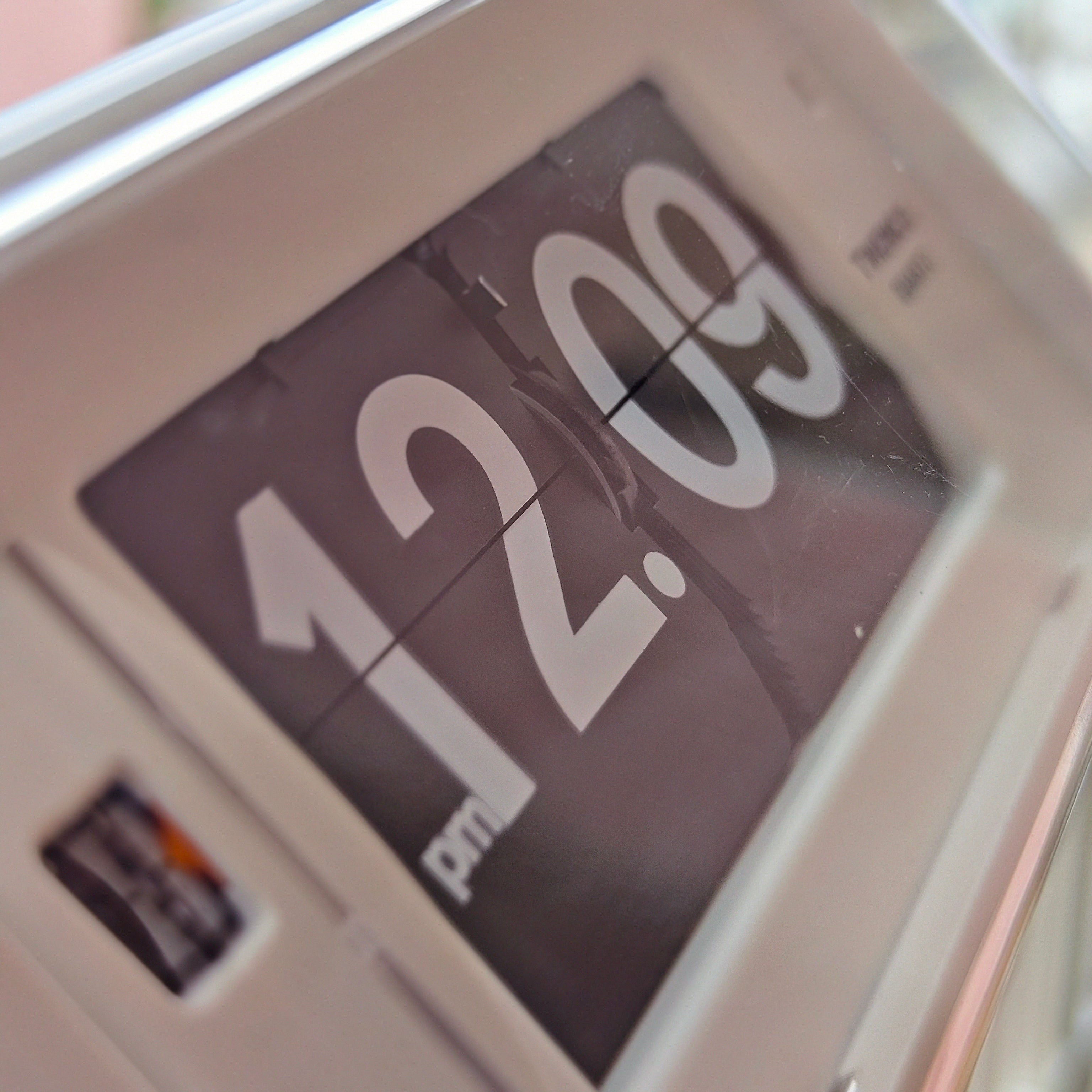
A flip clock on a desk enters peripheral vision naturally.
You don’t need to unlock a screen.
This sounds small, but small frictions influence habits.
Why Some People With ADHD Prefer External Time Cues
ADHD experiences vary widely, and no single tool works for everyone.
However, many productivity systems designed for ADHD rely on externalizing time.
Examples include:
Visual timers
Pomodoro clocks
Countdown devices
Wall planners
Physical schedules
Analog clocks
The idea is simple:
If time feels abstract internally, make it visible externally.
That visibility can reduce:
-
Missed transitions
-
Hyperfocus overruns
-
Deadline surprises
-
Task switching difficulties
Physical clocks become environmental reminders rather than interruptions.
The Return of Dedicated Focus Spaces
The pandemic accelerated remote work.
The next wave is something different:
Intentional environments.
People increasingly separate spaces into modes:
Work mode
Sleep mode
Reading mode
Creative mode
Objects inside those spaces influence behavior.
A desk with:
Laptop
Second monitor
Phone
Tablet
TV nearby
…creates different mental cues than:
Notebook
Lamp
Mechanical keyboard
Flip clock
Water bottle
Printed planner
The second setup often feels calmer.
Not because it’s magical.
Because fewer objects compete for attention.
Why Flip Clocks Fit the Analog Productivity Trend
Flip clocks were originally practical tools.
Today, they occupy an unusual middle ground between function and design.
They offer several characteristics that align with focus-oriented spaces:
1. Passive Visibility
Time remains visible across a room.
No activation needed.
2. Minimal Information Load
Many digital displays show:
Date
Weather
Notifications
Temperature
Icons
Flip clocks usually show only:
Hour
Minute
Sometimes date
Less information can reduce cognitive clutter.
3. Physical Passage of Time
The minute changes physically.
You witness time moving.
That subtle transition can increase awareness during long tasks.
4. Reduced Screen Dependency
Checking time no longer requires touching another device.
5. Environmental Rhythm
The occasional flip sound creates a soft reminder of progression.
Some people find it grounding.
Others prefer silent environments.
Preference matters.
The Psychology of Tactile Objects
Humans tend to engage differently with physical tools.
Writing by hand often improves retention.
Printed books can feel easier to absorb.
Mechanical switches feel satisfying.
Physical clocks create similar sensory interaction.
You see them.
Sometimes hear them.
Occasionally adjust them.
They become part of the workspace rather than software hidden behind tabs.
Analog Tools Don’t Need to Be Perfect to Be Useful
One misconception:
People assume productivity systems must optimize everything.
Reality:
Useful systems often reduce friction rather than maximize efficiency.
Example:
A sophisticated app with 20 features may be abandoned.
A simple desk clock used daily may persist for years.
Consistency usually matters more than complexity.
Building an ADHD-Friendly or Focus-Friendly Workspace
You do not need an expensive setup.
Try adding only a few physical anchors.
Suggested Focus Desk Setup
Visual time cue
-
Flip clock
-
Analog clock
-
Timer
Task capture
-
Notebook
-
Sticky notes
-
Whiteboard
Environmental control
-
Lamp
-
Headphones
-
Minimal desk clutter
Device boundaries
-
Phone outside reach
-
Notification reduction
Routine cues
-
Water bottle
-
Dedicated work location
The goal:
Make focus easier.
Make distraction slightly harder.
Small environmental changes accumulate.
The “Soft Productivity” Movement
Another trend growing in 2026:
People are moving away from productivity as constant optimization.
Instead:
Calmer routines
Sustainable focus
Better sleep
Less burnout
More intentional work
This is sometimes called soft productivity.
Not doing less.
Doing work with less friction and overwhelm.
Analog objects fit naturally into this philosophy.
Why Productivity Is Becoming an Interior Design Topic
Workspaces increasingly blend with living spaces.
As a result, people choose objects that are both functional and calming.
That explains the popularity of:
Mid-century furniture
Warm lighting
Wooden desks
Mechanical tools
Retro electronics
Flip clocks
Productivity is no longer only software.
It is becoming environmental design.
Your room influences behavior more than motivation alone.
The Best Productivity Tool Might Be the One You Notice Least
The most effective tools often disappear into routine.
You stop thinking about them.
You simply use them.
A wall clock.
A planner.
A notebook.
A timer.
A flip clock quietly marking minutes.
Their value comes less from features and more from presence.
Final Thoughts: The Future of Productivity May Be Less Digital, Not More

AI tools are becoming faster.
Apps are becoming smarter.
Automation is increasing everywhere.
Yet many people are moving in the opposite direction for focus:
More physical tools.
More visible time.
More intentional environments.
More boundaries between work and distraction.
Analog productivity isn’t nostalgia.
It’s a response.
A response to information overload, fragmented attention, and always-on devices.
Sometimes improving focus doesn’t require another app.
Sometimes it starts with changing the objects around you.