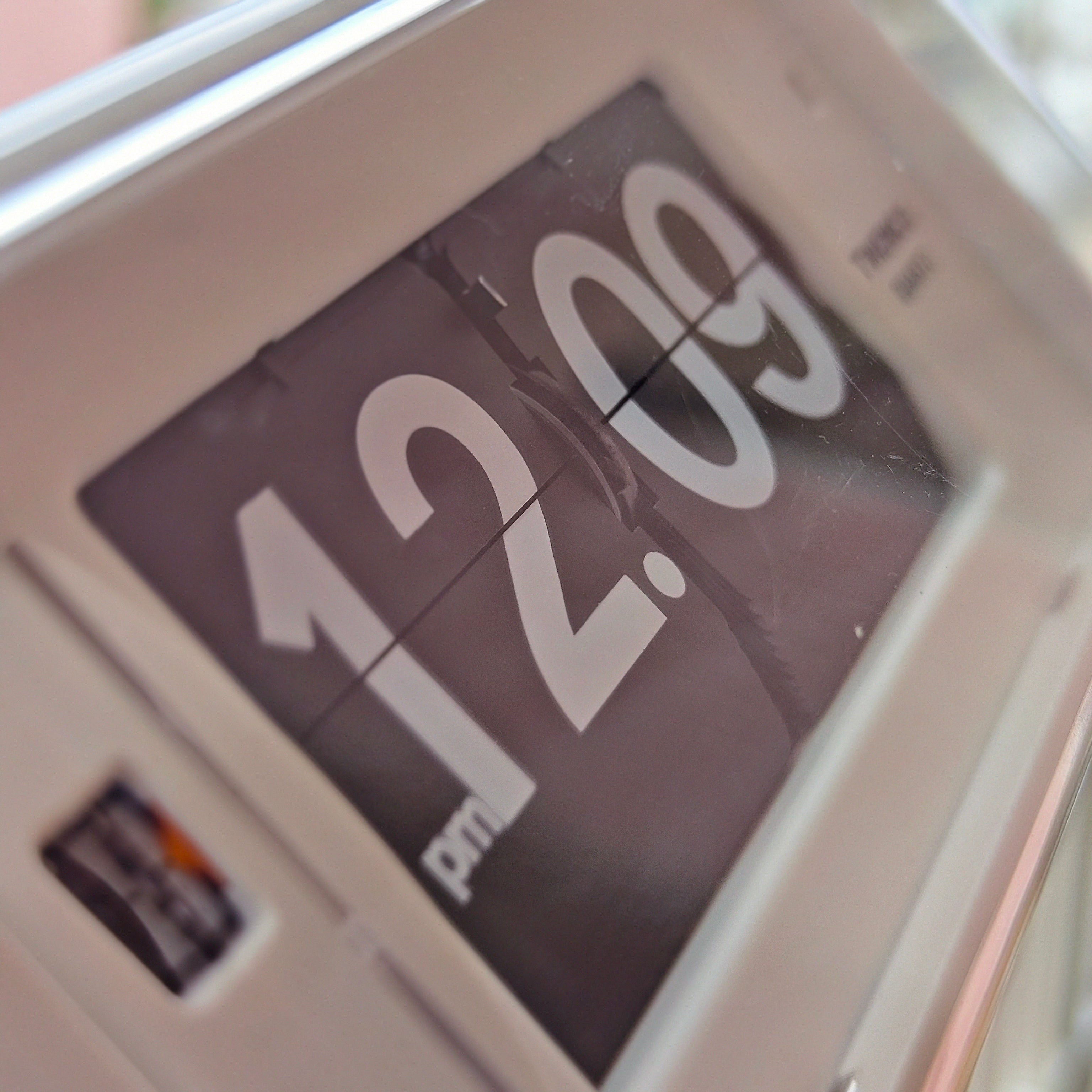
In a world full of productivity apps, browser extensions, and phone timers, it is easy to forget that focus does not always need more technology. Sometimes, the best way to manage time is to make it visible, physical, and simple.
That is exactly why a flip clock works so well with the Pomodoro Technique.
The Pomodoro Technique is a time management method built around focused work sessions, traditionally 25 minutes of work followed by a 5-minute break. After several rounds, you take a longer rest. The goal is simple: reduce distraction, make tasks feel manageable, and create a rhythm between effort and recovery.
But while most people use their phone as a Pomodoro timer, the phone is often the very thing they are trying to escape. A flip clock offers a different kind of experience: calm, visual, and screen-free.
Why a Flip Clock Makes Pomodoro Feel Better
A phone timer counts down aggressively. A laptop timer sits beside emails, messages, tabs, and notifications. A smartwatch vibrates on your wrist and pulls your attention back into the digital world.
A flip clock does the opposite.
It simply shows time passing.
The gentle flip of the minute card gives you a quiet sense of progress without demanding your attention. You do not need to unlock a screen, check an app, or risk falling into social media. You glance at the clock, understand where you are in the session, and return to the task.
For anyone trying to build a more focused workspace, this matters. The Pomodoro Technique is not just about timing. It is about protecting attention.

The Screen-Free Advantage
One of the biggest problems with using a phone for Pomodoro is friction. You pick it up to start a timer. Then you see a message. Then a notification. Then suddenly, your 25-minute focus session has become five minutes of work and twenty minutes of distraction.
A flip clock removes that temptation.
It gives you time awareness without digital noise. This is especially useful for people working from home, studying, writing, designing, or doing deep work. The clock becomes a visual anchor on your desk, reminding you that this block of time has a purpose.
You are not “working all day.”
You are just working until the next flip.
How to Use a Flip Clock for Pomodoro
The simplest method is this:
Choose one task. Look at the current time on your flip clock. Work for 25 minutes. When the time has passed, take a 5-minute break. Repeat the cycle four times, then take a longer break.
For example, if you start at 10:00, work until 10:25. Break until 10:30. Then start again until 10:55.
You do not need a complicated system. A notebook beside the clock is enough. Write down your task, mark each completed session, and keep going.
This makes the process feel more intentional. Instead of relying on an app to manage your attention, you are actively choosing how to spend your time.

The Beauty of Seeing Time Move
A flip clock adds something emotional to the Pomodoro Technique. Every minute has a small physical movement. The card turns. The sound is subtle. The display changes.
This gives time a sense of texture.
Digital timers often make time feel abstract. A flip clock makes it feel real. You can see the work session progressing without feeling pressured by a flashing countdown. This is why flip clocks fit so naturally into mindful productivity, analog workspaces, and slower living interiors.
They do not shout.
They remind.
Best Tasks for Flip Clock Pomodoro Sessions
A flip clock works especially well for tasks that need calm concentration, such as writing, reading, studying, design work, planning, admin, coding, email batching, language learning, and creative brainstorming.
It is also useful for household routines. You can use one Pomodoro to clean your desk, organize a shelf, fold laundry, or reset your room. The method is not limited to office work. It is simply a way to make time feel manageable.
A More Beautiful Desk Ritual
Productivity tools often look cold and temporary. A flip clock is different. It becomes part of the room.
Placed on a wooden desk, beside a notebook, lamp, or coffee cup, it creates a workspace that feels intentional. It supports focus while also adding character. For people who care about interior design, this is a rare combination: useful and beautiful.
A flip clock does not only help you manage time. It changes the atmosphere around your work.

Final Thoughts
The Pomodoro Technique works because it makes focus simple. A flip clock makes it even simpler by removing screens, reducing distractions, and turning time into something you can calmly observe.
You do not need another app to focus better.
You may just need a clock that quietly reminds you: one task, one session, one flip at a time.