With screens everywhere—from phones to laptops to smart home devices—people are becoming more aware of how digital displays affect eye comfort. One interesting debate that keeps coming up is this: are flip clocks actually easier on your eyes compared to digital clocks?
At first glance, it might seem trivial. A clock is a clock, right? But when you look closer at how each type displays information, the differences become more meaningful—especially if you’re sensitive to screen fatigue or spend a lot of time in visually demanding environments.
This article focuses on visual comfort; for the broader ownership decision, see the differences between mechanical and digital flip clocks across sound, power, maintenance and design.

1. How Flip Clocks Present Time
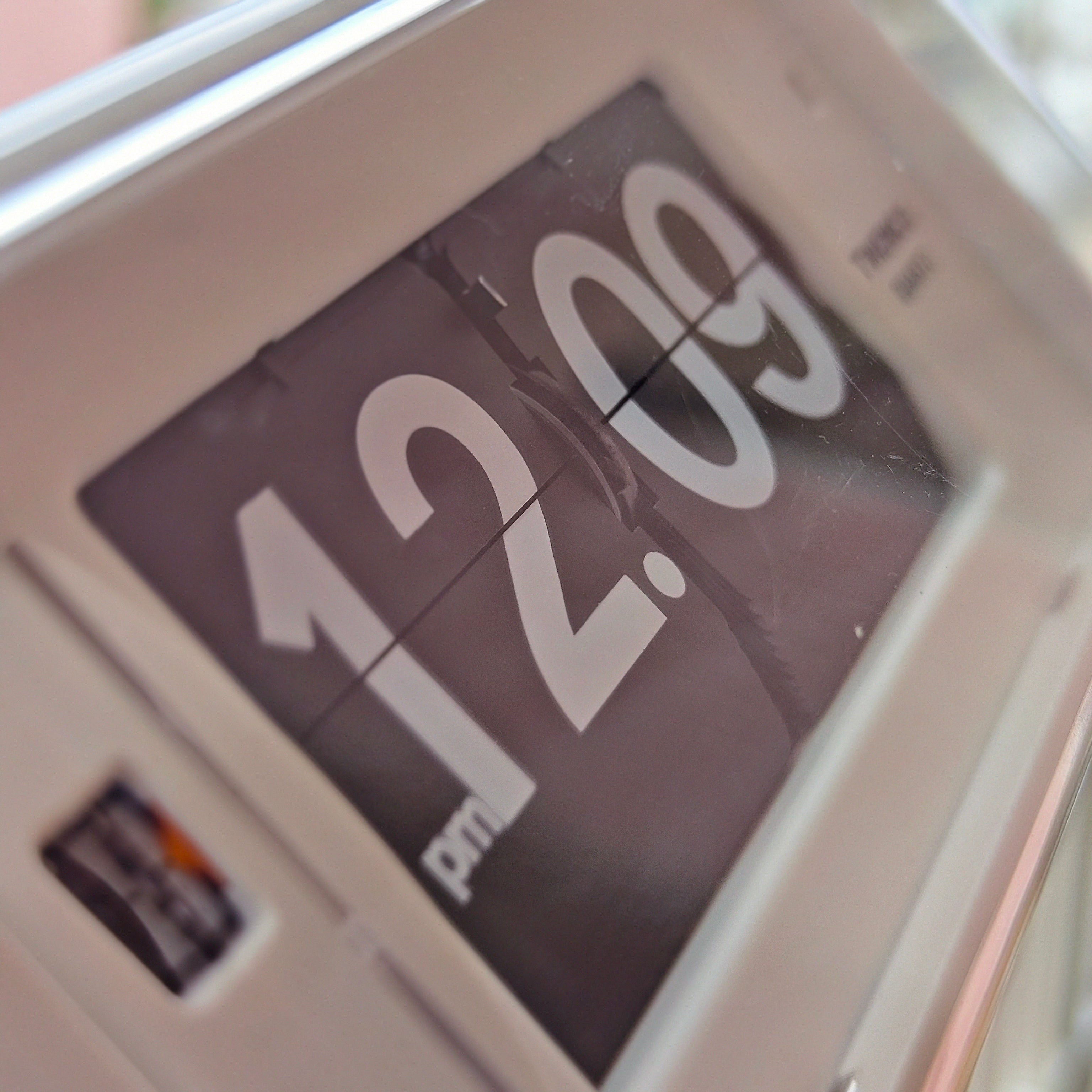
Flip clocks use mechanical or semi-mechanical cards that physically flip to show new numbers.
What this means for your eyes:
-
No backlight glare
-
No constant pixel flicker
-
No rapid visual refresh
-
A stable, static display between changes
The only visual change happens once per minute (or second in some models), when the card flips.
That creates a very low visual load. Your eyes are not constantly processing motion or brightness shifts.
2. How Digital Clocks Work
Digital clocks (LED, LCD, OLED) constantly display light through pixels.
Even though they look stable, they involve:
-
Continuous light emission
-
High contrast against dark backgrounds (especially at night)
-
Frequent micro-refreshing of pixels (in most screens)
-
Brightness that can feel harsh in low-light environments
Many digital clocks are also integrated into devices like phones or smart displays, which adds:
-
Notifications
-
Screen transitions
-
Background glow from other apps
Even when the clock itself is simple, the medium is inherently “active.”

3. Eye Strain: What Actually Matters
Eye comfort isn’t just about brightness—it’s about how your eyes process visual change.
Key factors that influence strain:
Flicker and Refresh
Digital displays may not appear to flicker, but they often refresh rapidly. Some people are sensitive to this, especially with OLED or PWM-dimmed screens.
Flip clocks:
-
Have no electronic refresh cycle
-
Change only at fixed intervals
-
Do not emit light (in most designs)
Brightness and Contrast
Bright screens in dark rooms can cause discomfort because your eyes constantly adjust.
Digital clocks:
-
Can be too bright at night
-
Often emit blue-rich light
Flip clocks:
-
Rely on ambient lighting only
-
Do not self-illuminate (unless hybrid models)
Continuous Visual Activity
Your brain processes motion and change even when you’re not consciously focused on it.
Digital clocks:
-
Always “active”
-
Always emitting light
Flip clocks:
-
Static most of the time
-
Only animate briefly during transitions
This reduced activity can feel calmer over long periods.
4. Nighttime Use: A Big Difference
At night, the contrast becomes even more important.
Digital clocks can:
-
Disrupt sleep environments
-
Create glowing light pollution in bedrooms
-
Feel visually intrusive in darkness
Flip clocks:
-
Remain naturally dim
-
Blend into the environment
-
Don’t affect melatonin via light emission
This is why many minimalist and wellness-focused interiors prefer analog or flip-style clocks for bedrooms.
5. Productivity and Focus
Some users report that flip clocks help them stay focused better than digital alternatives.
Possible reasons include:
-
No notifications or distractions
-
No screen temptation
-
A subtle awareness of time passing
-
Less visual stimulation overall
Digital clocks, especially on phones or computers, are often part of a larger attention ecosystem—one that encourages checking and interaction.

6. So Which Is Better for Your Eyes?
There isn’t a universal winner, but the differences are clear:
Flip Clocks are better if you want:
-
Minimal visual stimulation
-
No screen light exposure
-
A calm, non-distracting environment
-
Better nighttime comfort
Digital Clocks are better if you want:
-
Precise time formats (seconds, alarms, sync features)
-
Smart integrations
-
Multi-function displays
-
High visibility in all lighting conditions
Final Thoughts
From a purely eye-comfort perspective, flip clocks generally create a gentler visual experience. They remove many of the stress factors associated with digital screens—light emission, flicker, and constant motion.
But digital clocks win in functionality and convenience.
In the end, the better choice depends on your environment and how you interact with time. If you’re aiming for a calmer space—especially in bedrooms or minimalist interiors—a flip clock can be a surprisingly effective upgrade not just for aesthetics, but for visual comfort too. To choose by room, placement, lighting and everyday use rather than eye comfort alone, see our space-by-space comparison of flip and digital clocks. For a bedroom-specific comparison of non-luminous analogue, physical flip and on-demand LCD options, see our guide to bedroom clocks without bright displays.