It’s Not Just One Sound
Understanding the Acoustics of Analog Time
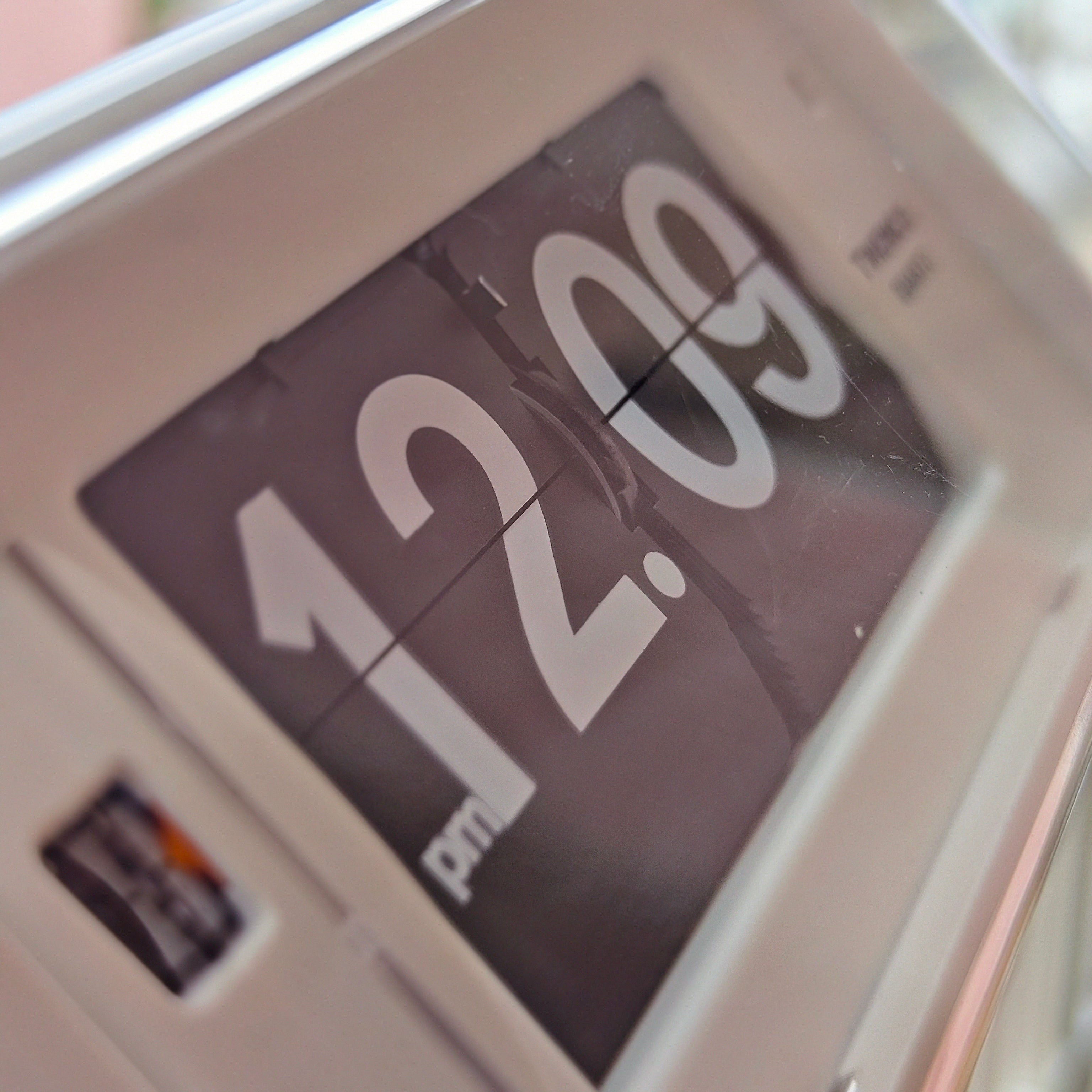
There’s a very specific sound that only flip clocks make—a soft, satisfying click-flip that marks every passing minute. It’s subtle, but once you notice it, you can’t unhear it.
But why do flip clocks make that sound in the first place?
The answer sits at the intersection of mechanics, physics, and design.
1. The Source of the Sound: A Mechanical Release
The “click” you hear is not random—it comes from a controlled mechanical release inside the clock.
Inside most flip clocks, there is:
-
A tensioned lever system
-
A rotating gear or cam
-
A hinged flip card
As the gear rotates, it slowly builds mechanical tension. When it reaches a specific point, the system releases suddenly, forcing the next card to flip into place.
That sudden release is what creates the signature sound.
2. It’s Not Just One Sound
What we hear as a single “click” is actually a combination of micro-sounds happening in milliseconds:
-
The release of tension inside the gear system
-
The hinge snapping of the flip card
-
The impact as the card lands
-
The air displacement caused by the quick motion
Our brain merges all of these into one clean auditory event.

3. Why the Sound Feels So Satisfying
The sound of a flip clock is not loud, but it is highly structured. That structure is what makes it feel pleasant.
Humans are naturally drawn to:
-
Predictable sounds
-
Soft mechanical rhythms
-
Repetitive patterns
A flip clock delivers all three, exactly once per minute.
It’s like a tiny mechanical heartbeat for time itself.
4. The Role of Materials
Different flip clocks sound different depending on what they’re made of.
Plastic-based clocks:
-
Softer, quieter clicks
-
Slightly hollow sound
-
More dampened impact
Metal-framed clocks:
-
Sharper, more defined click
-
Slight echo from the frame
-
More “industrial” character
High-end designs:
-
Balanced acoustic damping
-
Controlled impact surfaces
-
Minimal vibration noise
The materials shape the personality of the sound.

5. Why Digital Clocks Are Silent
Digital clocks don’t need to move anything physically to change numbers.
Instead, they:
-
Update pixels electronically
-
Refresh LED or LCD segments
-
Change display instantly without motion
No movement = no sound.
That’s why digital clocks feel “invisible” in comparison. Flip clocks, on the other hand, make time audible.

6. The Psychology of the “Click”
The sound of a flip clock does something interesting to the brain.
Because it happens:
-
At regular intervals
-
Without warning in exact timing
-
In a consistent mechanical pattern
your brain begins to subconsciously track time passing.
It becomes:
-
A rhythm cue
-
A focus anchor
-
A subtle environmental signal
For some people, this helps concentration. For others, it creates a calming background awareness of time.
7. The Beauty of Imperfection
Unlike digital timekeeping, flip clocks are not perfectly silent or invisible. They are intentionally physical.
That “click” is a reminder that:
-
Time is not abstract
-
Machines are moving
-
Something real is happening every minute
In a world of smooth glass screens and silent updates, the sound feels almost grounding.
Final Thoughts
The flip clock “click” is not just a byproduct of engineering—it’s part of the design itself.
It comes from:
-
Mechanical tension and release
-
Physical motion of cards
-
Material impact and vibration
But more importantly, it gives time a voice.
Not loud. Not intrusive. Just a small, steady reminder that another minute has passed.
And somehow, that’s what makes it memorable.