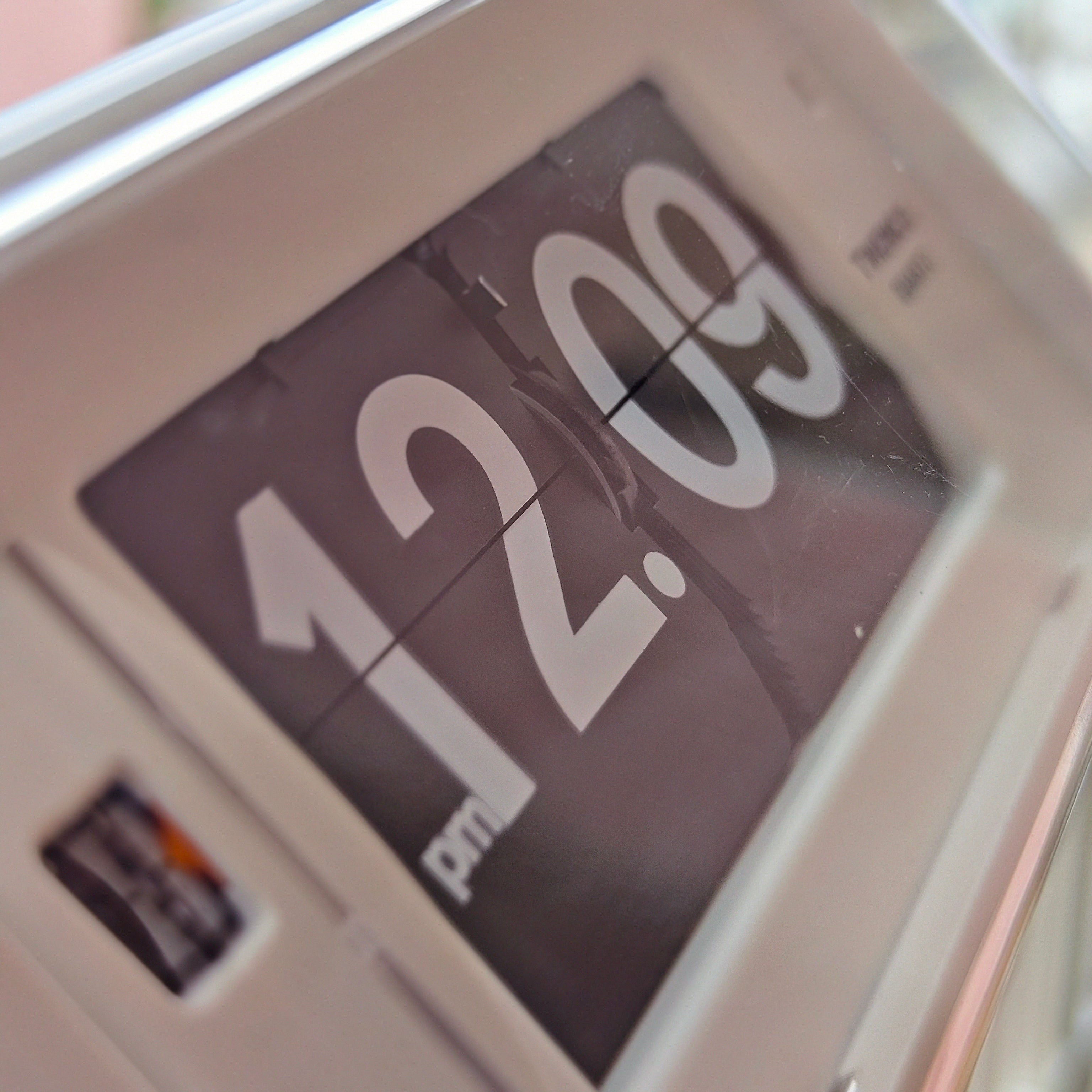
In an age dominated by digital screens and ephemeral notifications, the mechanical flip clock stands as a testament to enduring design and ingenious engineering. Its satisfying, rhythmic "thwack" as the numbers change is more than just a sound; it's a tactile connection to time itself. But what exactly goes on inside these captivating devices? How do they manage to keep perfect time with such a simple, elegant motion? Let's delve into the fascinating mechanical engineering that makes flip clocks truly timeless.
The Core Principle: Evolution from AC to Quartz
The heart of a flip clock has evolved significantly over the decades. In the "golden age" of the 1970s, classic bedside models (like those from Copal or GE) relied on an AC synchronous motor. This motor was designed to rotate at a precise speed locked to the 50Hz or 60Hz frequency of the alternating current from your wall outlet.
However, modern premium flip clocks, such as those from Twemco, utilize a more advanced battery-powered quartz movement. These clocks rely on a 32,768 Hz quartz crystal oscillator. This crystal sends a timed electrical pulse to a miniature motor, which in turn steps the mechanical gear train. This allows for the legendary "cordless freedom" and portability of modern designs while maintaining the high-precision timekeeping Twemco is famous for.
Regardless of the power source, the motor drives a series of gears that rotate the leaf assemblies. Each assembly consists of individual cards printed with numbers, designed to "flip" or drop into place with mechanical precision.
The Flipping Mechanism: A Dance of Gravity and Gears
The magic of the flip clock lies in its ingenious mechanism, which typically involves:
1.Minute Wheel: This wheel is directly driven by the motor's gear train. It rotates continuously.
2.Minute Leaf Assembly: Attached to the minute wheel, this assembly consists of 60 individual leaves (or cards), each representing a minute. As the minute wheel rotates, it carries these leaves along.
3.Hour Wheel and Gear: The minute wheel, through a clever gearing system, also drives the hour wheel. This gearing ensures that the hour display only changes after a full 60-minute cycle.
4.The Hour-Synchronization Logic: To ensure the hour and minute change at the exact same instant, engineers use a clever synchronization tooth. On the minute leaves for 45 through 59, there is a small molded extension. As the minute wheel approaches the top of the hour, this tooth pushes a secondary lever into place to hold the outgoing hour card.
5.The "Drop" or "Flip" Action: As the minute leaf drops from 59 to 00, that secondary lever trips, dropping the hour card at the same millisecond. This ensures the "thwack" of the new hour and the new minute happens in perfect unison—a hallmark of high-quality mechanical synchronization.
The Satisfying "Thwack"
The characteristic "thwack" sound is produced by the minute leaf hitting the stack of leaves below it. This sound is not a flaw; it's an integral part of the clock's charm, providing an auditory confirmation of time's passage. In premium clocks like those from Twemco, this sound is often engineered to be a soft, satisfying click rather than a harsh clatter, a testament to their superior build quality and precision.
Why Mechanical Flip Clocks Endure
Beyond their nostalgic appeal, the mechanical flip clock's enduring popularity stems from several key factors:
- Durability: With fewer electronic components, these clocks are less susceptible to obsolescence. A well-maintained mechanism can last for decades, often outliving many digital counterparts. Brands like Twemco are renowned for their longevity.
- Readability: The large, high-contrast numbers on the leaves are incredibly easy to read from a distance, even in low light (especially if the clock has a backlight).
- Analog Productivity: In a world of constant digital distractions, a flip clock offers a focused, single-purpose time display. It encourages analog productivity by allowing you to check the time without engaging with a screen that might pull you into emails or social media.
- Aesthetic Appeal: The kinetic movement and retro design make flip clocks a captivating piece of functional art. They seamlessly blend into Mid-Century Modern decor and add character to any space.
The Future of Analog Time
While the technology behind flip clocks might seem old-fashioned, their appeal is anything but. They represent a deliberate choice to slow down, appreciate craftsmanship, and engage with time in a more tangible way. As we continue to seek balance in our increasingly digital lives, the humble flip clock, with its ingenious mechanical heart, will undoubtedly continue to charm and serve for generations to come. You can explore a wide range of these timeless pieces in Dong's Vintage Collection or the Fartech collection.