Whether you're preparing for school exams, university assignments, or professional qualifications, your study environment can have a significant impact on how well you learn. Many students assume they struggle because they lack motivation, but more often than not, the real culprit is a workspace filled with distractions.
Phones buzz with notifications, desks become cluttered with unrelated items, and poor lighting makes it difficult to stay alert. Individually these distractions seem minor, but together they constantly interrupt your concentration. Creating a dedicated study space helps remove these barriers, allowing you to spend less energy fighting distractions and more energy learning.
Your Environment Shapes Your Focus
Our brains naturally associate certain spaces with certain activities. A library encourages quiet concentration, while a living room invites relaxation. If your desk is where you study, watch videos, scroll social media, and play games, your brain receives mixed signals every time you sit down.
Creating a study area that's used primarily for focused work helps establish a routine. Over time, simply sitting at your desk becomes a mental cue that it's time to study. This habit reduces the effort required to get started and makes it easier to stay focused for longer periods.
Keep Your Desk Simple
A tidy workspace isn't just visually appealing—it also helps reduce mental clutter. Every unnecessary object on your desk competes for a small amount of your attention, even if you don't consciously notice it.
Before each study session, clear away anything you won't need. Keep your notebook, textbook, laptop, stationery, and a bottle of water within easy reach, while storing unrelated items elsewhere. A few minutes spent organising your desk before you begin can make your study session feel calmer and more productive.
The same idea applies to your computer. Close unnecessary browser tabs, silence desktop notifications, and organise your files so you're not constantly searching for what you need.
Lighting and Comfort Matter
Many students overlook the physical environment, yet it plays a major role in maintaining concentration. Natural daylight is ideal because it reduces eye strain and helps you stay alert. If you're studying in the evening, a quality desk lamp combined with comfortable room lighting creates a more pleasant environment than relying on a single overhead light.
Your chair and desk setup are equally important. Sitting comfortably with proper posture reduces fatigue, allowing you to study for longer without constantly shifting position or taking unnecessary breaks. Small adjustments, such as raising your monitor to eye level or ensuring your feet rest comfortably on the floor, can make a noticeable difference during longer study sessions.
Reduce Digital Distractions
For most students, the biggest distraction isn't noise—it's the smartphone sitting beside the keyboard.
Checking the time often turns into replying to a message, browsing social media, or watching a short video. What was supposed to take a few seconds can quickly become several minutes of lost concentration.
A simple solution is to keep your phone out of reach while studying. Place it in a drawer, leave it across the room, or enable Focus Mode so only essential notifications appear. Every interruption forces your brain to refocus, making it harder to return to deep concentration.
Studying without constant digital interruptions may feel unusual at first, but many students notice a significant improvement after only a few sessions.
Keep Time Visible Without Using Your Phone
One challenge many students face is keeping track of time without becoming distracted. Reaching for a phone to check the clock often leads to checking messages or social media instead.
Using a dedicated desk clock removes this temptation completely. Because its only purpose is to display the time, you can glance at it and immediately return to your work. Our guide to the best clocks for a study desk compares quiet analogue, compact digital, flip-clock and timer setups.
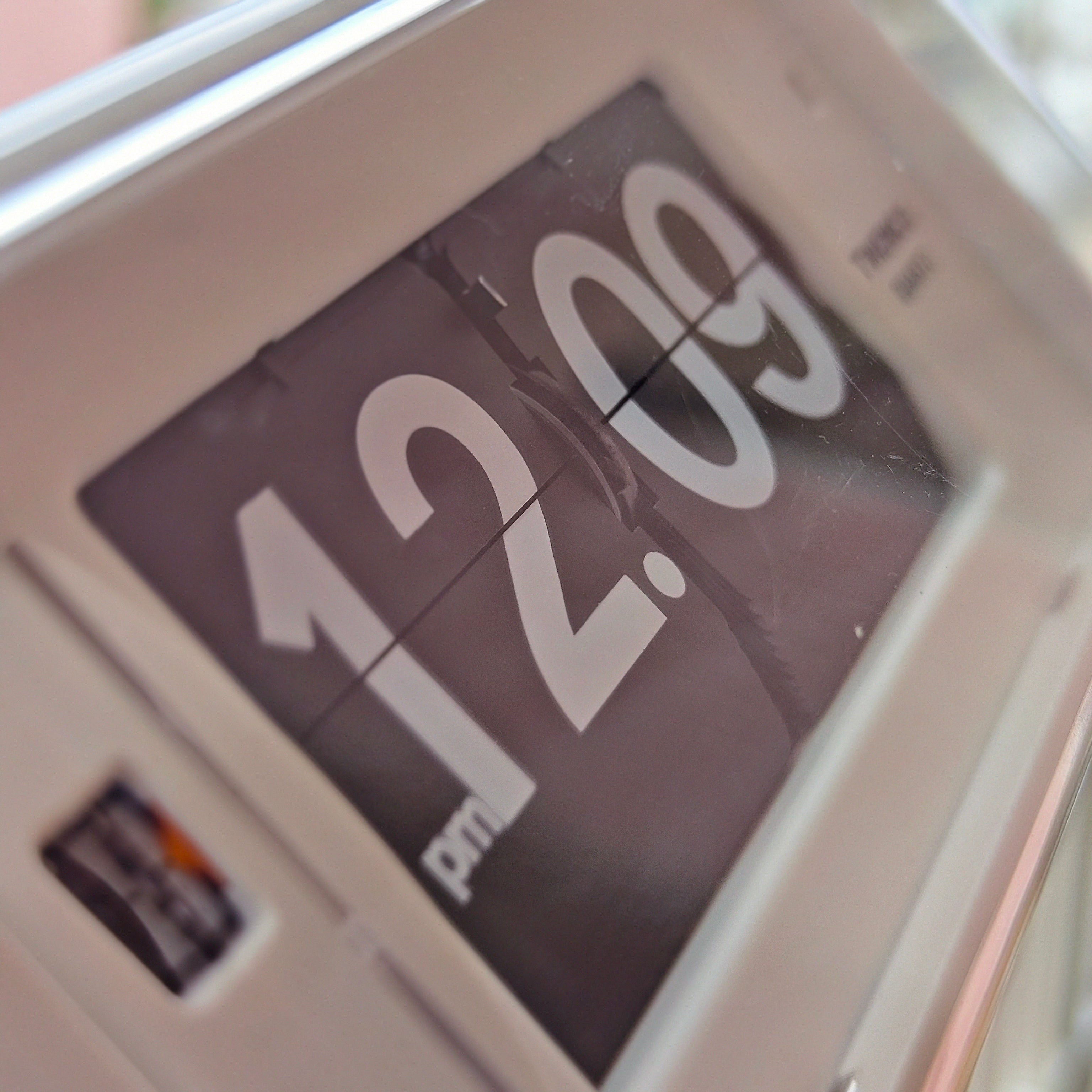
A flip clock is particularly effective because its large, easy-to-read display can be seen from anywhere on your desk. Each minute flips forward with a subtle mechanical movement, gently reminding you that time is passing without interrupting your concentration.
This makes it an excellent companion for study techniques such as the Pomodoro Method, where maintaining awareness of time is important but unnecessary digital distractions are best avoided. Many students also appreciate the calm, analog nature of a flip clock, especially in a world filled with glowing screens.
Build Habits Instead of Relying on Motivation
The best study space isn't necessarily the most expensive or the most aesthetically pleasing. It's the one that consistently helps you focus.
Developing a simple routine before each study session can make a big difference. Clear your desk, prepare a glass of water, organise your materials, decide what you want to accomplish, and begin immediately. These small actions become signals that prepare your mind for focused work.
Over time, you'll spend less energy convincing yourself to study because the habit becomes automatic. Your environment starts working with you rather than against you.
Final Thoughts
Creating a distraction-free study zone doesn't require a complete room makeover. Small improvements, such as keeping your desk organised, improving your lighting, reducing digital distractions, and using a dedicated clock instead of your phone, can dramatically improve the quality of your study sessions.
The goal isn't perfection—it's consistency. A workspace that encourages concentration day after day will always be more valuable than an elaborate setup that's rarely used. Build a space that makes it easier to focus, and productive study sessions will gradually become part of your daily routine.