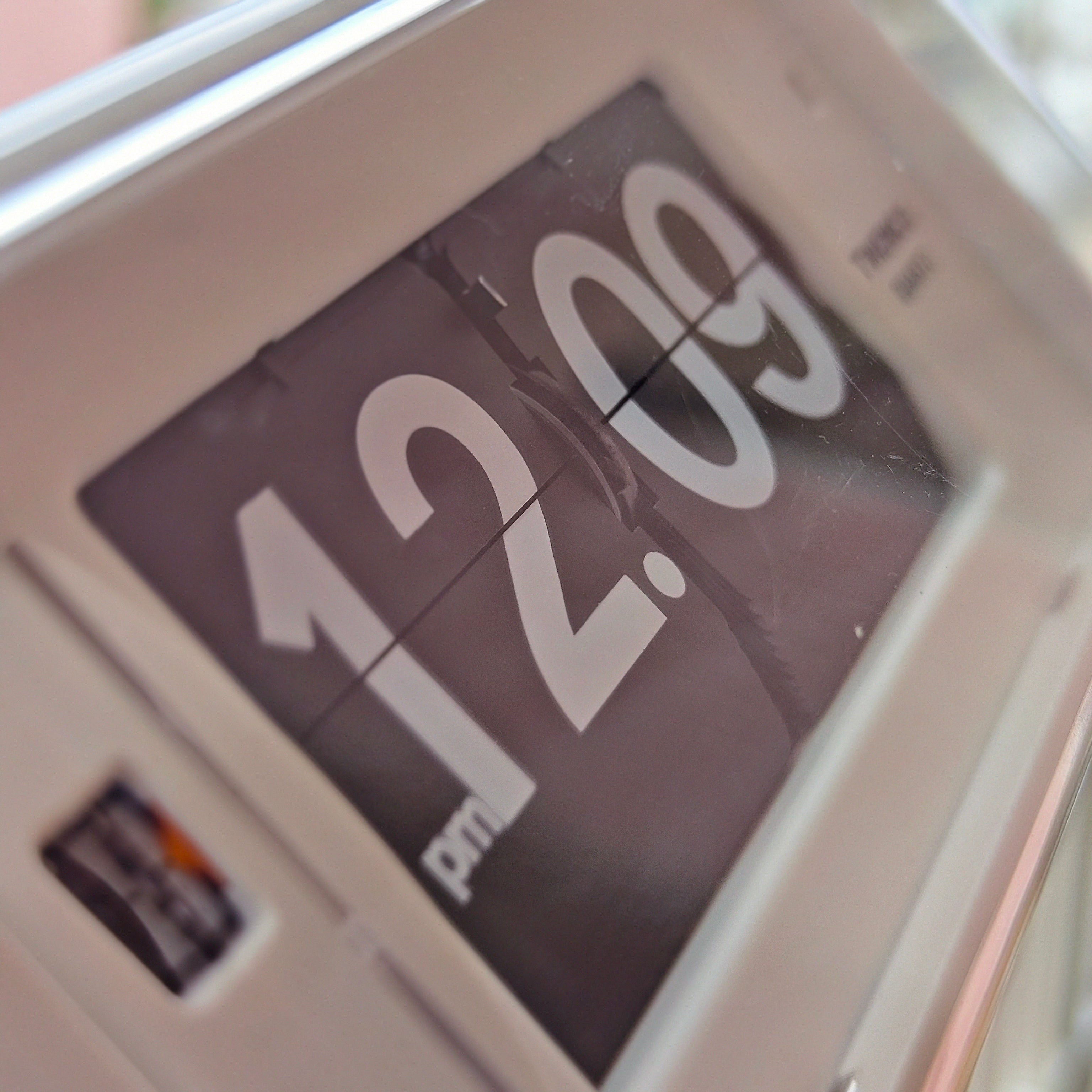
A clock can count seconds, minutes, and hours with a repeating set of gears. But a calendar is far less predictable. Some months contain 31 days, others contain 30, February usually contains 28, and every four years it gains an extra day.
So how can a day date time clock recognise all of these changes without checking the internet or receiving a software update?
The answer is surprisingly elegant. A perpetual calendar does not truly “know” the date in the way a computer does. Instead, information about the calendar is physically encoded into its essential parts of a clock—gears, cams, levers, and rotating wheels. It is essentially a small mechanical computer built to repeat a four-year programme.
Why Ordinary Date Clocks Need Correction
A basic date mechanism usually follows a simple 31-day cycle. Once every 24 hours, the clock advances its date display by one position. After reaching 31, it returns to 1.
This works perfectly at the end of January, March, May, July, August, October, and December. However, it creates a problem during shorter months. Unless the mechanism understands which month it is, it will try to display dates such as 31 April or 30 February.
That is why many standard calendar clocks require occasional manual adjustment. Their mechanisms can count days, but they do not contain enough mechanical information to distinguish one month from another.
A perpetual calendar adds another layer of memory.
The Four-Year Mechanical Programme
At the heart of a traditional perpetual calendar is often a wheel or cam that completes one full rotation every four years. This represents 48 consecutive months: 12 months multiplied by four years.
Each section of the cam corresponds to a particular month. Its physical shape tells the mechanism whether that month should contain 28, 29, 30, or 31 days. Most of the February sections are programmed for 28 days, while one section allows the date mechanism to reach February 29.
Rather than storing information as ones and zeros, the clock stores it through differences in height, depth, position, or tooth arrangement.
A small lever rests against the surface of the cam. As the cam rotates, the lever rises or falls according to the shape beneath it. That movement controls how far the date mechanism advances when the month ends.
In a 31-day month, the calendar completes its normal cycle. At the end of a 30-day month, the mechanism skips directly from 30 to 1. After an ordinary February, it moves from 28 to 1 March. During the leap-year position, it allows February 29 to appear before advancing into March.
How the Clock Moves the Calendar
The energy usually begins with the clock’s main timekeeping movement, following many of the same principles seen in how a mechanical flip clock actually works. As the hour mechanism completes each 24-hour cycle, it slowly loads a spring or moves a calendar lever.
Near midnight, the stored energy is released. The lever pushes the date wheel forward, causing the numeral, hand, disc, or calendar flap to change.
At the end of a month, additional parts examine the position of the month cam. The cam does not actively send instructions. Instead, its shape limits or redirects the movement of the connected levers.
This is a beautiful example of mechanical logic. The clock makes a decision without electronics because the possible answers have already been built into the geometry of its components.
Why Leap Years Exist
A calendar year contains 365 days, but Earth takes slightly longer than that to orbit the Sun. The Gregorian calendar compensates by adding February 29 approximately once every four years.
The complete rule is more complicated than simply checking whether a year is divisible by four. Century years are not normally leap years unless they are also divisible by 400. That means 2000 was a leap year, but 2100 will not be one.
Most traditional perpetual calendars use a repeating four-year mechanism and therefore treat 2100 as a leap year. They will require a one-day correction at the beginning of March 2100. More advanced “secular” or “eternal” calendars can mechanically account for the additional century rule, but they require an even more elaborate system of reduction gears.
Mechanical Memory Without Electricity
What makes a perpetual calendar fascinating is not simply its accuracy. It is the way it transforms an abstract calendar rule into a physical object.
The position of a gear represents the year. The contour of a cam represents the length of a month. A lever reads that contour, while springs and wheels carry out the result. Together, these components preserve information even though none of them understands what a Monday, February, or leap year actually is.
Electronic calendars solve the same problem with programmed instructions. A mechanical perpetual calendar solves it through movement, shape, timing, and carefully controlled force.
Every midnight, the mechanism performs another tiny calculation. Most changes are ordinary, but once every four years, a component that has been moving almost unnoticed finally reaches its special position and allows February 29 to appear.
That rare moment reveals the real magic of a perpetual calendar: it has been preparing for leap day all along.