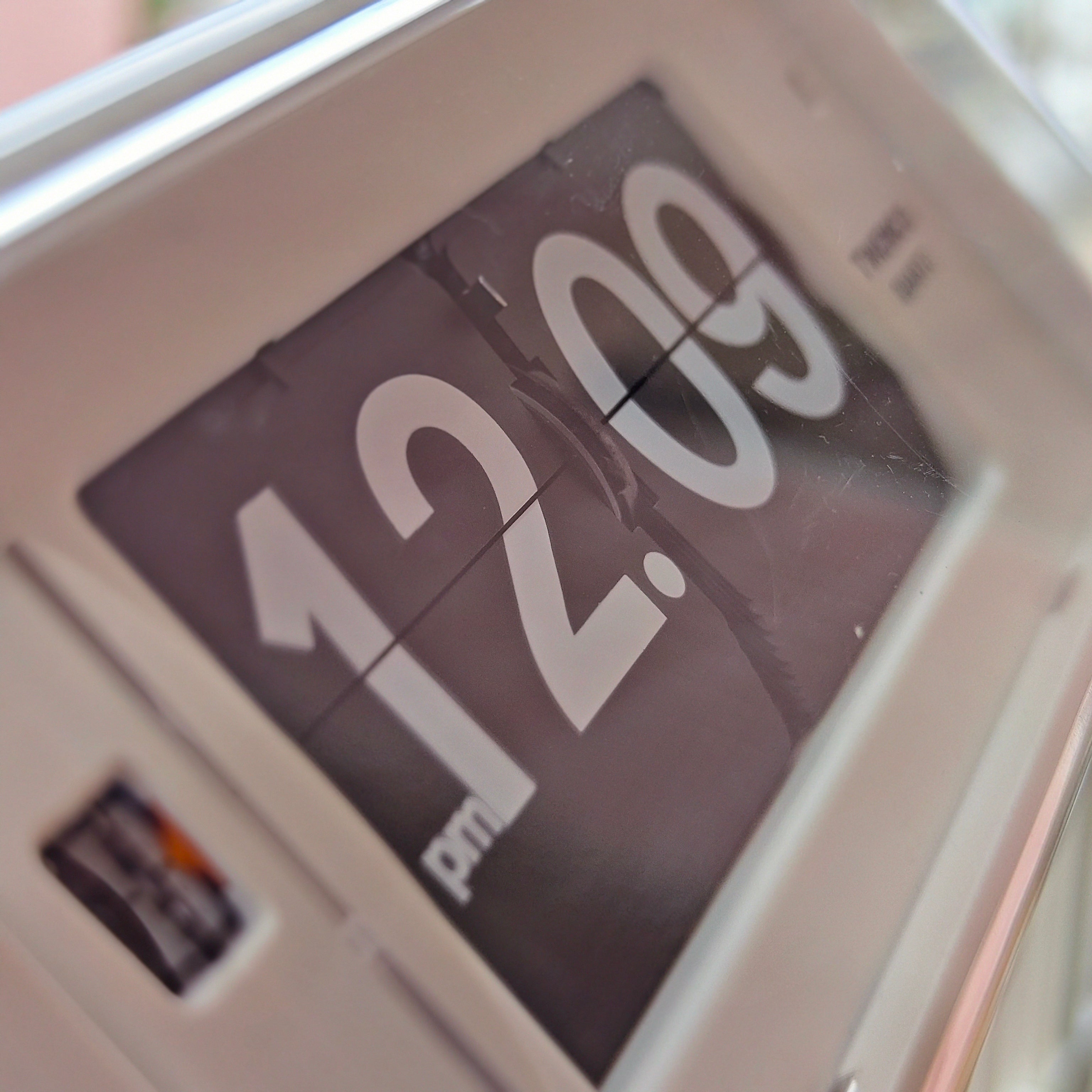
Retro objects can make a modern home feel more personal, but a room can quickly tip from considered to themed when every surface is telling the same story. The easiest way to keep the balance is to treat retro as one ingredient in a present-day room: choose a few pieces with character, connect them to the rest of the space through colour, material or shape, and leave enough quiet around them.
That approach works whether your starting point is a flip clock, a vintage lamp, a sculptural vase or a piece of furniture inherited from family. You do not need to recreate a particular decade. You need a visual relationship between the old-looking object and the room you already live in.
Start with the room you have
Before buying anything, identify what already gives the room its character. Look at the largest elements first: the sofa, dining table, bed, cabinetry, flooring and wall colour. These are the room’s visual baseline. A retro piece will feel intentional when it relates to that baseline, even if it contrasts with it.
Pick one connection to work with. It might be the warm tone of a wood sideboard, the black line of a metal lamp, a rounded silhouette repeated in a chair and mirror, or a colour already present in a rug. Repeating one cue is often enough. Exact matching can make the room look like a showroom set; a small echo lets the objects belong together without appearing purchased as a kit.
Designers often use a mixture of eras, materials and textures to give a room a layered rather than period-set quality. The V&A’s discussion of contemporary designer Sophie Ashby describes her interiors as combining antique and modern pieces through art, furniture, textiles, colour and texture. That is a useful principle for a home: connect objects through more than their date or style label.
Choose one anchor, then edit around it
Give the room one clear retro anchor. It could be a chair, a clock, a lamp, a sideboard or a patterned textile. Let that piece carry most of the nostalgic character; nearby objects can be quieter, contemporary or simply useful. If you add several equally strong period cues, the room may start to resemble a set rather than a home.
Think in terms of visual weight, not a strict item count. A large, high-contrast object has more presence than a small ceramic dish. A retro sofa may be enough on its own, while a compact clock can sit with a few supporting accents. Stand at the doorway and notice where your eye lands. If it jumps between too many focal points, remove or relocate one item.
For clocks specifically, decide whether the object should lead the composition or support it. A flip clock’s bold numerals and moving display can read as a graphic accent; it does not need to be surrounded by other retro technology. Our guide to placing a flip clock in a modern interior focuses on that smaller, clock-specific decision.
Repeat a colour or material, not an entire decade
Colour is a gentle way to connect different periods. If a vintage object has a muted green finish, repeat a related green in a book spine, cushion or artwork. If it is brass or chrome, echo that metal once elsewhere. You are creating a thread, not a uniform palette. The modern pieces can keep their own shapes and finishes.
Materials do similar work. A wood object can sit naturally beside contemporary linen, ceramic, glass or matte metal. A glossy retro object may benefit from a softer textile nearby. Contrast keeps the mix alive: smooth beside textured, rounded beside straight, dark beside light. In Architectural Digest’s guide to blending decorating styles, designers use contrasts in texture, line, natural materials and light-dark balance to bring different looks together.
Avoid repeating every signature colour and motif from the same decade at once. One strong period colour can feel fresh; a matching set of furniture, wall art, lighting and accessories in the same recognisable language can make the room feel like a themed restaurant. If you love a specific movement, borrow its restraint or geometry rather than copying a complete catalogue page. For a more focused look at mid-century rooms, see our guide to styling mid-century modern décor today.
Mix silhouettes and scale
One reason retro décor feels dated is not age itself, but repetition: too many objects share the same low profile, tapered legs, starburst outline or rounded plastic form. Break up those repeated silhouettes. Pair a curved vintage piece with a clean-lined contemporary table, or place a compact retro object against a larger, simple backdrop.
Scale matters as much as style. A small accent can disappear on a deep console; a large sculptural piece may overwhelm a narrow shelf. Measure the surface and leave visible space around the object. In a grouping, vary heights and shapes, then keep one or two items visually quiet so the display has a resting point.
Try a quick test before you commit: take a photo of the arrangement from the main doorway or seating position. A camera flattens the scene and makes crowded clusters easier to spot. If every object seems to compete, remove one item and look again.
Use retro objects in practical, lived-in rooms
Living room
Start with one expressive object on a sideboard or open shelf. Keep nearby books, bowls or lamps in a related palette, but vary their shape and age. A retro clock can become a small point of movement against modern furniture; a MIDCLOCK Home Decor Flip Clock, for example, has an exposed, graphic mechanism that reads differently from a quiet, enclosed clock. Treat it as an object in the composition, not a cue to fill the whole room with nostalgic accessories.
Entryway
An entry has little room for clutter, so one well-chosen piece can do the work. A vintage mirror, a compact lamp or a clock above a console may be enough. Keep the drop zone functional: leave clear space for keys and bags, and avoid placing fragile objects where they will be knocked.
Desk or reading corner
A retro object can bring warmth to a contemporary workspace without taking over. Pair a tactile piece with a straightforward task lamp and a clear work surface. A flip clock can add movement and an easy-to-read display; if you are deciding between a display-led clock and a more discreet accent, compare the choices in our guide to vintage and modern clock design.
If you are browsing for inspiration, the Retro collection brings together current retro-style designs, while Dong’s vintage collection is a separate look at older clocks. For the difference between an object’s age and its style, read what “vintage” and “retro” mean for clocks.
Keep the room from feeling old-fashioned
When the room looks more nostalgic than you intended, do not assume every vintage object needs to go. First check whether there are too many similar cues. Remove one repeated motif, introduce a contemporary shape, or give the most distinctive item more space. A modern artwork, a plain lamp or a simple textile can bring a period object back into the present without disguising its character.
Next, look at condition and function. Wear can be part of an object’s appeal, but grime, damaged finishes or unsafe wiring are different matters. For older electrical lighting, seek qualified inspection or repair rather than treating a decorative appearance as proof that it is safe. For a clock, distinguish a genuinely older piece from a newly made retro design; our guide on vintage versus retro clocks explains why those labels describe different things.
Finally, edit for daily life. Keep walkways clear, make seating usable, and leave working surfaces available for their real purpose. A room feels current when it supports the people who use it, not when every object follows the newest trend. Retro décor works best as part of that lived-in mix: a few memorable pieces, a connection to the present, and enough space for both to be seen.
Frequently Asked Questions
How many retro pieces should I use in one room?
There is no fixed number. Start with one anchor and add supporting objects only when they connect through colour, material or shape. The room’s size and the visual weight of each object matter more than a quota.
Can retro décor work in a minimalist home?
Yes. Choose one or two pieces with a clear silhouette or material, then keep the surrounding surfaces relatively uncluttered. A single expressive object can add warmth without changing the room’s overall simplicity.
What is the difference between vintage and retro décor?
Vintage generally refers to an older object from a past period; retro describes a style that recalls the past, whether the object is old or newly made. The distinction is useful when shopping and when describing a room’s mix.
How do I keep a retro room from looking like a theme?
Use a limited number of strong period cues, repeat only one or two colours or materials, and mix in contemporary shapes and practical pieces. Leave open space so the room does not read as a display set.