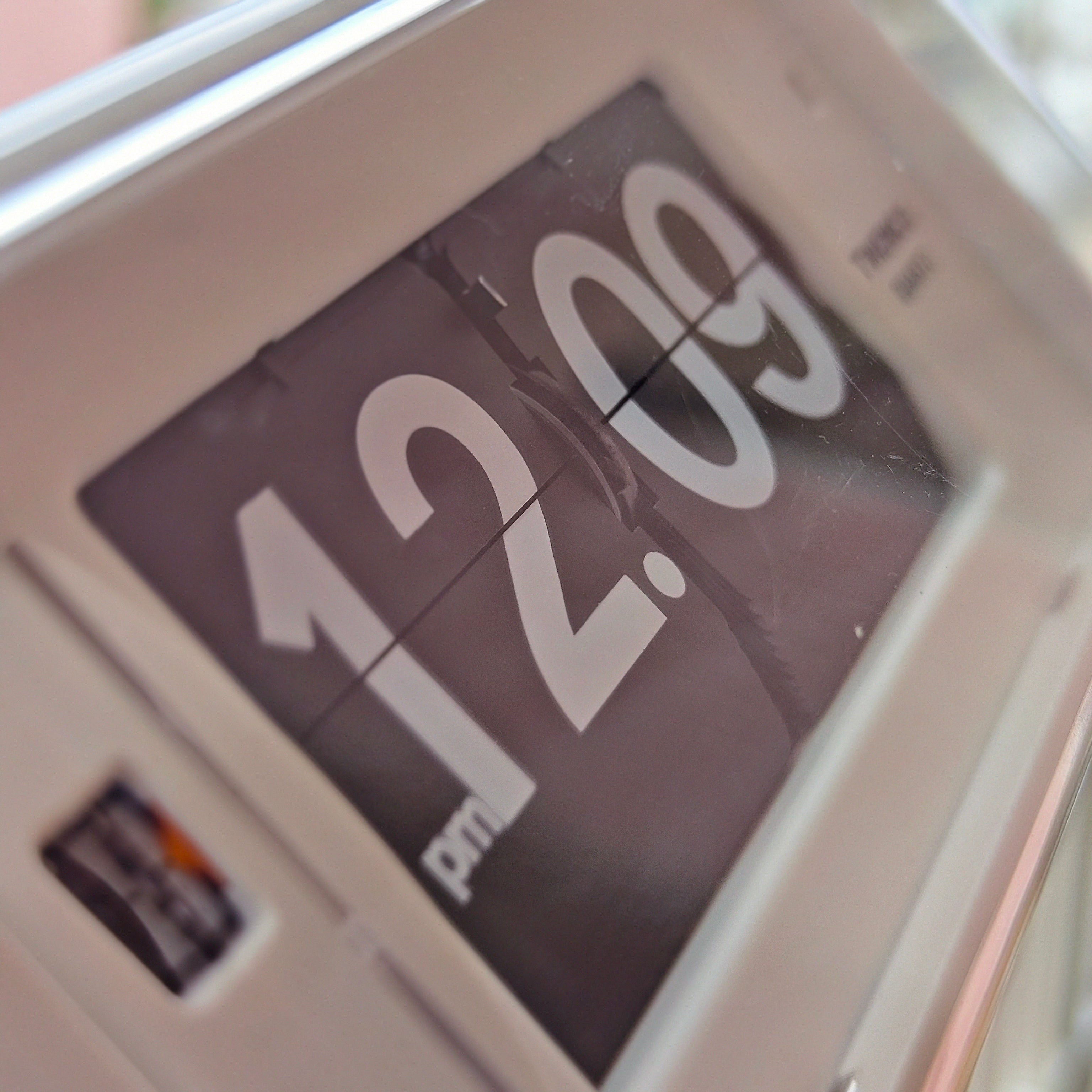
Have you ever replaced the batteries in a wall clock and realised you couldn't even remember when you installed the previous ones?
In a world where smartphones need charging every day and smartwatches rarely last a week, it's almost surprising that some analog clocks—especially mechanical flip clocks—can keep running for one or even two years using just a single battery.
It may sound like old technology, but the secret is actually brilliant engineering. Rather than constantly consuming electricity, analog clocks are designed to use only the energy they truly need.
Modern Gadgets Never Really Sleep
Most electronic devices are always working, even when they appear idle.
A smartphone constantly checks for notifications, maintains network connections, refreshes its screen, and runs background processes. Smart displays and digital clocks also need to keep their electronics active so the time remains visible every second of the day.
Although each individual task uses only a small amount of power, they never completely stop. Over weeks and months, that continuous consumption adds up, which is why rechargeable batteries have become part of everyday life.
Analog Clocks Take a Different Approach
A battery-powered analog clock follows a much simpler philosophy.
Instead of powering a display around the clock, it only needs enough energy to keep accurate time and move the hands—or, in the case of a flip clock, change the display once every minute.
Between those movements, almost nothing is happening.
The quartz movement quietly keeps time while consuming extremely little electricity. Only when the minute changes does the small motor briefly activate to advance the mechanism before returning to its resting state.
Battery runtime and timekeeping accuracy are separate questions; our guide to flip-clock accuracy explains how to measure drift and distinguish it from display lag.
That simple design is one of the biggest reasons why battery life can be measured in years instead of days. Battery runtime is not the same as the clock’s service life; our flip-clock lifespan guide explains what eventually wears and how maintenance affects longevity.
The Flip Mechanism Is More Efficient Than It Looks
Many people assume a mechanical flip clock must consume more power because it physically moves every minute.
In reality, the movement lasts only a fraction of a second.
The familiar "thwack" sound happens because a small motor briefly turns the gears to flip the next card into place—a process that becomes even more interesting when you understand how a mechanical flip clock actually works. Once the action is complete, the motor stops completely until the next minute arrives.
Unlike an illuminated display that continuously draws electricity, the flip mechanism only asks for power when something actually changes.
It's an elegant example of using energy only when it's needed.
Less Technology, More Efficiency
One reason analog clocks remain so dependable is that they are built with a single purpose.
They don't connect to Wi-Fi.
They don't receive software updates.
They don't run apps, sensors, or wireless radios.
By removing unnecessary electronics, almost all of the battery's energy is dedicated to one task: keeping accurate time.
Sometimes, the simplest solution is also the most efficient.
Why It Still Matters Today
Long battery life isn't just convenient—it also helps explain why physical clocks still matter in a digital world.
Replacing batteries less often means less maintenance, less waste, and fewer interruptions. Whether a clock sits on a home office desk, in a living room, or inside a professional workspace, it quietly does its job without demanding attention.
That's part of the enduring appeal of analog technology. Instead of competing for your focus, it fades into the background while remaining reliable year after year.
As more people embrace minimalist workspaces and analog productivity, products that prioritise simplicity over endless features continue to prove that thoughtful engineering never goes out of style.