Walk into a major airport in the 1970s or 1980s and one sound immediately captured the atmosphere—the rapid "thwack-thwack-thwack" of a giant departure board updating hundreds of flights at once. Before LED screens and smartphone apps became part of daily travel, these mechanical information boards guided millions of passengers around the world.
Known as split-flap displays, they weren't just practical pieces of technology. They became symbols of travel itself, combining engineering, movement, and sound in a way that modern digital displays rarely achieve. Even today, their influence lives on through mechanical flip clocks that bring the same timeless charm into homes and offices.
What Exactly Is a Split-Flap Display?
A split-flap display is a mechanical sign made up of hundreds of individual modules. Inside each module is a rotating wheel fitted with printed flaps, each displaying a letter, number, or symbol. When a small electric motor rotates the wheel, the flaps flip one after another until the correct character appears.
By arranging hundreds of these modules together, airports and railway stations could display flight numbers, destinations, departure times, platform information, and delay notices. Every update was completely mechanical, giving passengers the satisfying visual and audible experience that made these displays so memorable.
Unlike today's digital screens, every character physically existed. The same principles can still be seen in how a mechanical flip clock actually works today. Nothing was animated on a display panel—it was real movement powered by gears, motors, and carefully engineered mechanics.
Why Were They So Popular?
During the mid-20th century, transportation networks were expanding rapidly, and manually changing printed timetable boards was becoming increasingly inefficient. Split-flap technology offered a revolutionary solution.
Information could be updated automatically within seconds while remaining highly visible from a distance. The displays worked reliably under bright sunlight, required relatively little power, and could operate continuously for years with proper maintenance.
For decades, they represented the cutting edge of public information systems, becoming standard fixtures in airports and train stations across Europe, North America, and Asia.
The Sound That Defined an Era
Ask anyone who travelled frequently before the digital age, and many will remember the sound before the appearance of the board itself.
Whenever schedules changed, hundreds of flaps rotated simultaneously, creating the unmistakable mechanical rhythm that echoed throughout the terminal. That sound became associated with departures, arrivals, holidays, business trips, and the excitement of exploring somewhere new.
Unlike silent LED screens, split-flap displays made every update feel alive. You could hear information changing before you even looked up.
It's one of the main reasons collectors and design enthusiasts continue to admire them today.
Why Did Airports Stop Using Them?
As technology evolved, airports needed displays capable of showing more than simple text. Digital LED and LCD screens introduced full-colour graphics, multiple languages, live animations, weather updates, advertising, and instant remote control.
Although split-flap displays remained reliable, maintaining thousands of moving mechanical parts became increasingly expensive compared to modern electronic alternatives.
By the early 2000s, many of the world's most famous departure boards had been replaced. While a few historic stations still preserve their original mechanical boards, most now survive as museum pieces or architectural landmarks that remind visitors of a different era of travel.
Their Legacy Lives On
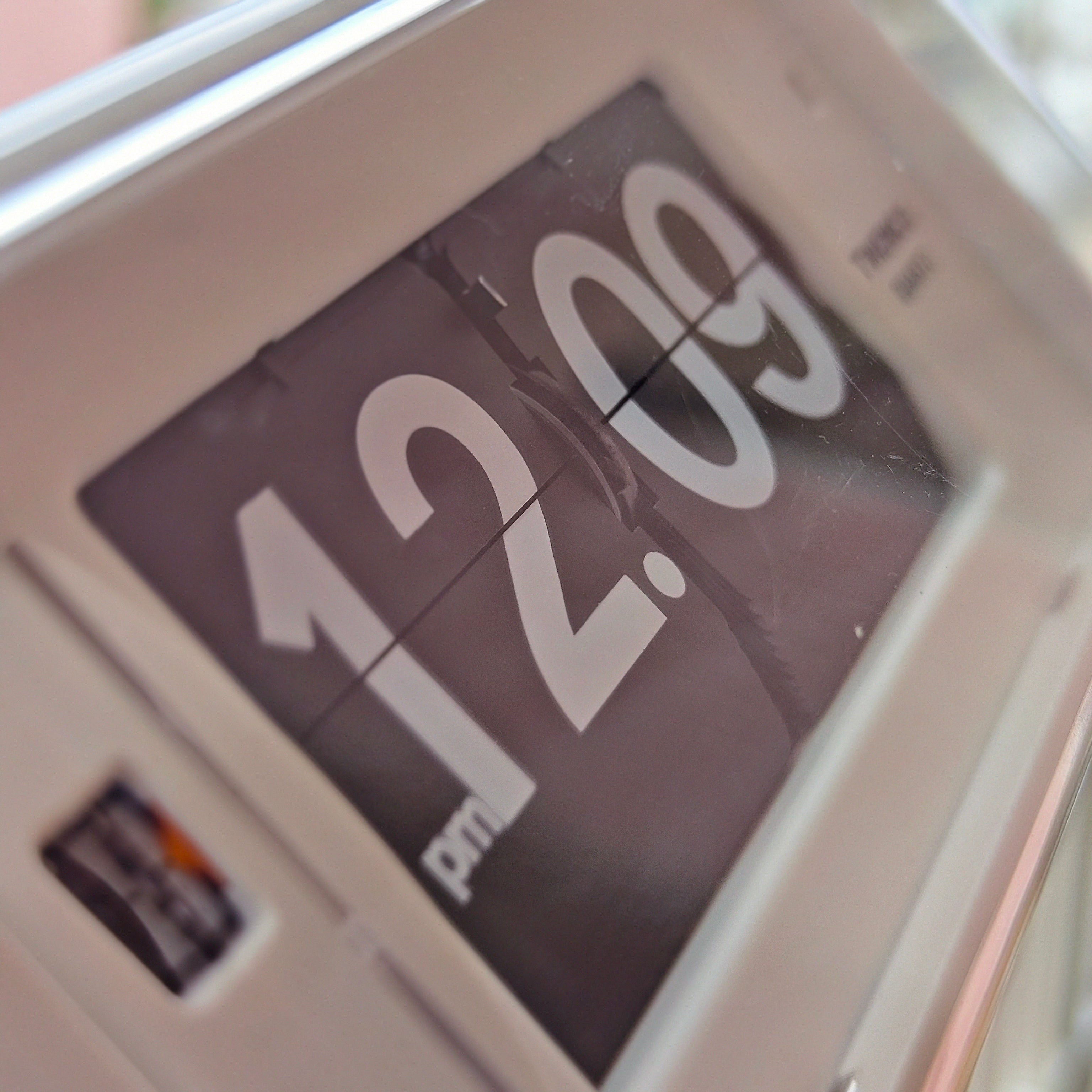
Although large transportation displays have mostly disappeared, the split-flap concept continues to thrive in a smaller form: the retro flip clock.
Every minute, a flip clock performs the same satisfying movement that once echoed through airport terminals. Rather than using pixels, it marks the passage of time through genuine mechanical action, creating an experience that feels both nostalgic and refreshingly tactile.
This is why brands like Twemco continue to attract collectors, designers, and horology enthusiasts. Their clocks preserve the distinctive visual language of classic split-flap displays while fitting seamlessly into modern homes, offices, and creative workspaces.
In an age where almost everything is displayed on a screen, mechanical flip clocks reflect the growing analog aesthetic, reminding us that great design isn't always about adding more technology. Sometimes, it's about creating an experience that people can see, hear, and appreciate every single day.
Final Thoughts
Split-flap displays were far more than information boards. They represented an era when engineering and design worked together to make public spaces more engaging. Their movement, sound, and unmistakable appearance transformed something as simple as reading a departure time into a memorable experience.
While airports have embraced digital technology, the spirit of the split-flap display lives on through mechanical flip clocks. Every flip is a small tribute to one of the most iconic inventions in transportation history—a reminder that some designs never truly go out of style.